
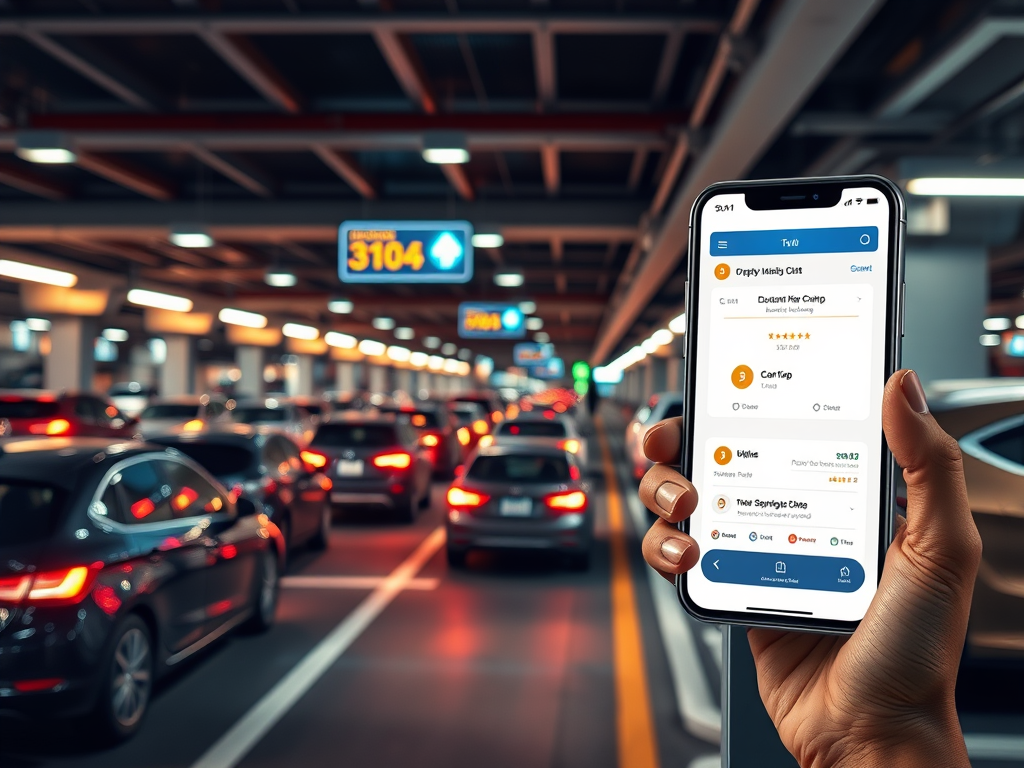
We’ve all been there: driving in circles, frantically searching for an open parking spot. The stress of urban congestion, the hassle of fumbling for change, and the frustration of dealing with outdated payment machines are a universal experience. For decades, the parking industry has relied on fragmented, inefficient systems that are a source of stress for drivers and a logistical nightmare for operators. But what if there was a way to solve this? What if a technology could automate the entire process, reduce friction, and make finding and paying for parking as seamless as a single tap?
Welcome to the intersection of urban mobility and decentralized technology. Cryptocurrency and blockchain are emerging as powerful tools to revolutionize the parking industry, transforming it from a source of frustration into a model of efficiency, security, and convenience. This is not a futuristic concept; it’s a quiet revolution already underway in smart cities around the world. This post will delve into how blockchain’s unique features are addressing the core problems of traditional parking and paving the way for a smarter, more connected urban landscape.
The Problem: A System Built for the Past
Before we look at the solutions, it’s crucial to understand the deep-rooted problems that plague traditional parking.
- Insecure and Centralized Data: Most parking systems rely on a single, centralized authority to manage payments, reservations, and access. This creates a single point of failure, making the entire system vulnerable to security breaches, fraud, and data manipulation. From a privacy perspective, this centralization means sensitive information—like a driver’s travel patterns or payment details—is stored in one vulnerable location.
- Payment Inefficiency: Whether it’s feeding coins into a meter, swiping a card, or using a clunky app, parking payments are often cumbersome. For parking lot operators, credit card transaction fees can eat into profits, and the lack of a universal payment system creates friction for users.
- Lack of Transparency: There is often a lack of transparency between the user and the service provider. For instance, disputes over payment, parking duration, or space availability can be difficult to resolve without a clear, immutable record of the interaction.
- Traffic and Congestion: A significant portion of urban traffic is generated by drivers looking for parking. This adds to air pollution, wastes time and fuel, and contributes to the general chaos of city life. The current system provides little to no real-time guidance on available spaces, exacerbating the problem.
The Blockchain Solution: Building a Smarter System
Blockchain technology, with its decentralized and tamper-proof ledger, offers a new paradigm for urban mobility. By shifting from a centralized model to a distributed network, it provides solutions that are more secure, efficient, and transparent.
1. Decentralized, Secure Payments
Cryptocurrency provides a secure and universal payment method that bypasses traditional financial intermediaries.
- Eliminating Middlemen: By using a crypto-based payment system, drivers can pay for parking directly to the parking lot’s wallet. This removes banks and credit card companies from the equation, resulting in significantly lower transaction fees for operators and faster, more direct transactions for users.
- Universal Compatibility: A crypto payment can be processed from anywhere in the world, in a consistent and secure manner. This eliminates the need for different payment processors or currency conversions, creating a seamless experience for all users, regardless of their location.
2. Smart Contracts for Automated Everything
Smart contracts are self-executing agreements with the terms of the agreement written directly into code on the blockchain. They are the engine that makes a crypto-based parking system truly “smart.”
- Automated Reservation and Access: A smart contract can be programmed to automatically reserve a parking space and trigger a payment when a vehicle arrives. When a sensor detects that a vehicle has left the spot, the contract can automatically stop the payment and potentially refund any unused time. This removes the need for human attendants and complex, centralized booking systems.
- Dynamic Pricing: With a smart contract, parking lot operators can implement dynamic pricing based on real-time demand. The contract can be coded to automatically adjust the per-minute rate based on occupancy levels. This incentivizes drivers to use less-congested lots and helps manage traffic flow more effectively.
- Automated Enforcement: Smart contracts can also handle enforcement. If a vehicle overstays its allotted time, a smart contract could automatically issue a fine to a digital wallet on a registered car, or even signal a tow service, all based on pre-defined, tamper-proof rules.
3. Data Privacy and Immutability
Blockchain’s distributed and immutable nature is a game-changer for data integrity and user privacy.
- Tamper-Proof Records: Every transaction—from a payment to a vehicle’s entry and exit timestamp—is recorded on an immutable public ledger. This creates a transparent and irrefutable record of every interaction, which is invaluable for resolving disputes and preventing fraud.
- Enhanced Privacy: By using a blockchain, users’ personal data can be kept off-chain, while the transaction data is recorded on-chain. This provides an enhanced level of privacy. For example, a driver’s identity can be cryptographically secured, while the smart contract simply interacts with their wallet address to process a payment, without revealing personal information.
Real-World Applications and the Road Ahead
The potential of crypto in smart parking is not just a theoretical exercise. Pilot projects and academic frameworks are already demonstrating its feasibility.
- The M-Zone Project: A notable example is the M-Zone pilot project, a collaboration between Fetch.ai and Datarella in Munich. This initiative uses an AI-powered, tokenized incentive system to optimize parking. It doesn’t just manage payments; it rewards drivers with a cryptocurrency token for not using their cars and instead opting for public transport when parking is scarce. This innovative approach uses a crypto-based incentive to influence behavior and reduce urban congestion.
- Decentralized Platforms: Research papers and prototypes have explored creating decentralized parking systems where a consortium of parking lot owners manages a shared blockchain. This removes the need for a single company to control all data and allows for a more secure, peer-to-peer parking ecosystem.
These projects highlight that the future of parking isn’t just about finding a spot—it’s about creating a system that is fairer, more efficient, and aligns with the goals of a smarter, more sustainable city. The journey to mass adoption will require addressing challenges like regulatory clarity and user education, but the foundation has been laid.
A Positive Outlook: The Future is Frictionless
The integration of cryptocurrency and blockchain technology into urban mobility is a powerful example of how decentralized systems can solve real-world problems. By transforming the simple act of parking, we can reduce traffic, lower costs, and create a more secure and seamless experience for everyone.
The future of urban life is not about finding a way to fit more cars into a city; it’s about building intelligent, interconnected systems that make our lives easier and our cities smarter. The next time you park, you might not be swiping a card or fumbling for change. You might be making a fast, secure payment on a decentralized network, all thanks to the power of crypto.
#SmartCities #Crypto #Blockchain #UrbanTech #FutureOfMobility
Leave a Reply