
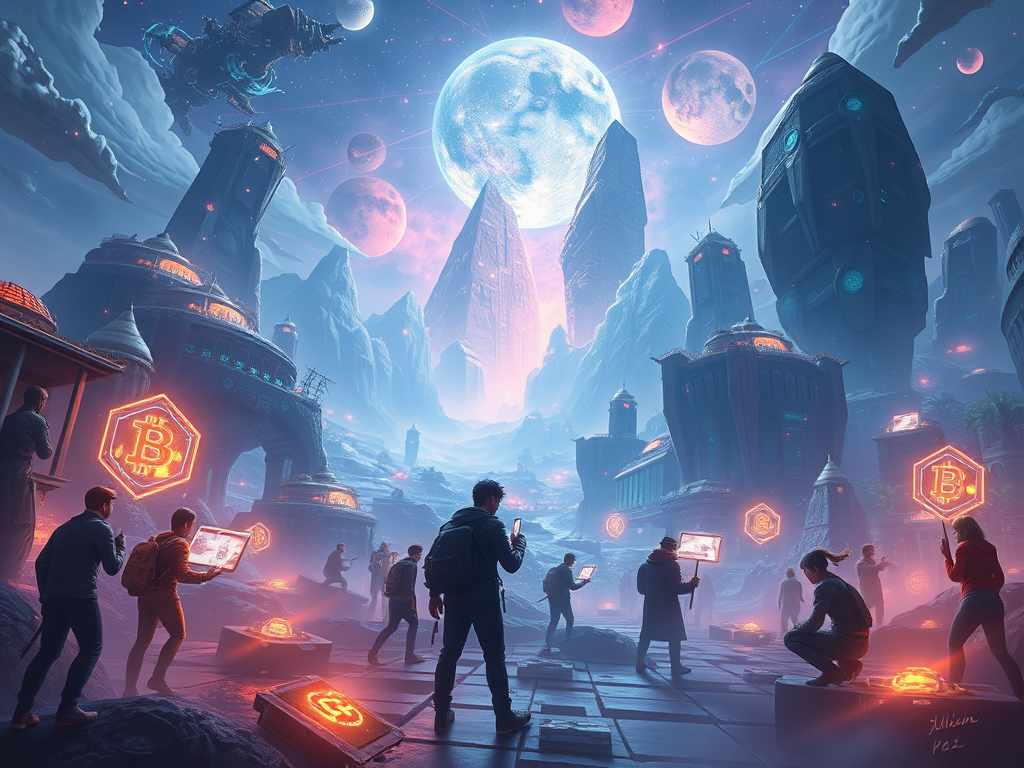
For decades, the gaming world has been a place of pure entertainment. We buy a game, spend money on in-game items or subscriptions, and when we stop playing, the value we’ve created—the rare armor, the legendary sword, the highly-ranked character—disappears or remains locked on a centralized server. The time and effort we pour into these digital worlds is a cost, a form of leisure.
But what if your time spent gaming could create real, tangible value? What if your hard-earned achievements were not just pixels on a screen but digital assets you could truly own, trade, and even sell for real-world value?
This revolutionary idea is the heart of GameFi, a term that has exploded in popularity, igniting a new conversation about the future of gaming. By combining the immersive experience of gaming with the transparent, decentralized nature of finance, GameFi is rewriting the rules and creating a new paradigm for both players and creators.
This guide will demystify GameFi, explain its core components, and reveal why it’s poised to become one of the next major trends in the digital world.
What Is GameFi? A New Model for Gaming
GameFi is a portmanteau of “gaming” and “finance.” At its core, it refers to blockchain-based games that incorporate economic incentives, allowing players to earn cryptocurrency and Non-Fungible Tokens (NFTs) through gameplay. This is a fundamental shift from the traditional “pay-to-play” or “free-to-play” models, giving rise to the “Play-to-Earn” (P2E) movement.
In a P2E game, players can generate real-world value through various activities, such as:
- Winning battles or completing quests to earn in-game cryptocurrency.
- Collecting, breeding, or crafting rare in-game assets that are tokenized as NFTs.
- Owning virtual land that can be developed and monetized.
- Lending or renting out their in-game assets to other players.
The key difference is that the in-game items and currencies you acquire are no longer controlled by a central game developer. They exist on a public, decentralized blockchain, making them verifiable, secure, and truly owned by you.
The Building Blocks of a GameFi Ecosystem
To understand how GameFi works, you must grasp its two primary components: Non-Fungible Tokens (NFTs) and fungible cryptocurrencies.
NFTs: True Digital Ownership
In traditional gaming, when you buy a rare skin or a powerful weapon, you are only purchasing a license to use it. The game developer retains ultimate control. They can remove the item, ban your account, or shut down the server, and your purchase disappears.
NFTs solve this problem. An NFT is a unique digital asset stored on a blockchain. When an in-game item is minted as an NFT, it is provably scarce and cannot be duplicated. This gives players true ownership of their digital assets. If the game’s servers go down, your NFT still exists on the blockchain, and you can trade, sell, or hold it as you see fit. This opens up a world of possibilities, allowing players to create, trade, and even borrow against their digital property in open marketplaces.
In-Game Tokens: The Economic Engine
Most GameFi projects use their own native cryptocurrency, which serves as the economic backbone of the game. Players earn this token by completing tasks, winning competitions, or reaching milestones. This token can then be used to purchase in-game items, upgrade characters, or participate in the game’s governance.
These tokens can be freely traded on cryptocurrency exchanges, allowing players to convert their in-game earnings into other digital assets or even fiat currency. Some games also use a dual-token model: one for in-game rewards and a separate “governance” token that allows holders to vote on key decisions about the game’s future.
Why GameFi is a Major Disruption
The integration of gaming with blockchain technology is not just a passing fad; it’s a fundamental shift that challenges the traditional gaming industry on three major fronts.
1. Shifting Power from Developers to Players
In traditional gaming, developers and publishers hold all the power. They decide what content is released, how much items cost, and what rules are enforced. GameFi introduces a more democratic, player-centric model. Through governance tokens and Decentralized Autonomous Organizations (DAOs), players can collectively vote on proposals and directly influence the game’s development. This creates a stronger sense of community and a shared stake in the game’s success.
2. Redefining Value Creation
GameFi transforms gaming from a one-way revenue model (players pay developers) into a two-way value exchange. For the first time, players can be contributors and owners in the ecosystems they inhabit. This opens up entirely new revenue streams for players and creates a powerful incentive for deeper engagement and long-term commitment. In some regions, GameFi has even emerged as a significant source of income, providing economic opportunities in ways that were previously unimaginable.
3. Creating a New Class of Digital Economy
The ability to truly own and trade digital assets creates a vibrant, player-driven economy that operates beyond the confines of a single game. NFTs can be sold on third-party marketplaces, creating a new layer of value that benefits players directly. This shifts the focus from “pay-to-win” to an ecosystem where players are rewarded for their skill, strategy, and time.
The Evolution and Challenges Ahead
While the P2E model was a huge step, the industry is evolving to a more sustainable “Play-and-Earn” model. The focus is shifting away from purely financial incentives and back to creating games that are, first and foremost, fun and engaging. The most successful games of the future will be those that strike a balance between compelling gameplay and meaningful financial rewards.
However, the path forward is not without its challenges. The industry faces hurdles such as:
- Scalability: Blockchains can be slow and expensive, making it difficult to support the high volume of transactions that a popular game requires.
- User Experience: Onboarding for beginners can be complex, requiring a knowledge of crypto wallets and blockchain networks.
- Sustainability: Some GameFi projects have struggled with maintaining their token economies, as the supply of in-game rewards outpaces demand, leading to inflation.
Despite these challenges, the future of GameFi is bright. As blockchain technology becomes faster and more user-friendly, and as developers learn to build more sustainable economic models, the line between gaming and earning will continue to blur. GameFi is not just a trend; it’s a new frontier that promises to empower players and redefine our relationship with digital worlds.
What’s a GameFi concept that you find most exciting? Share your thoughts in the comments below! If you found this post insightful, please share it with others, and for our new viewers, be sure to follow us to stay up to date on our latest content.
Leave a Reply