
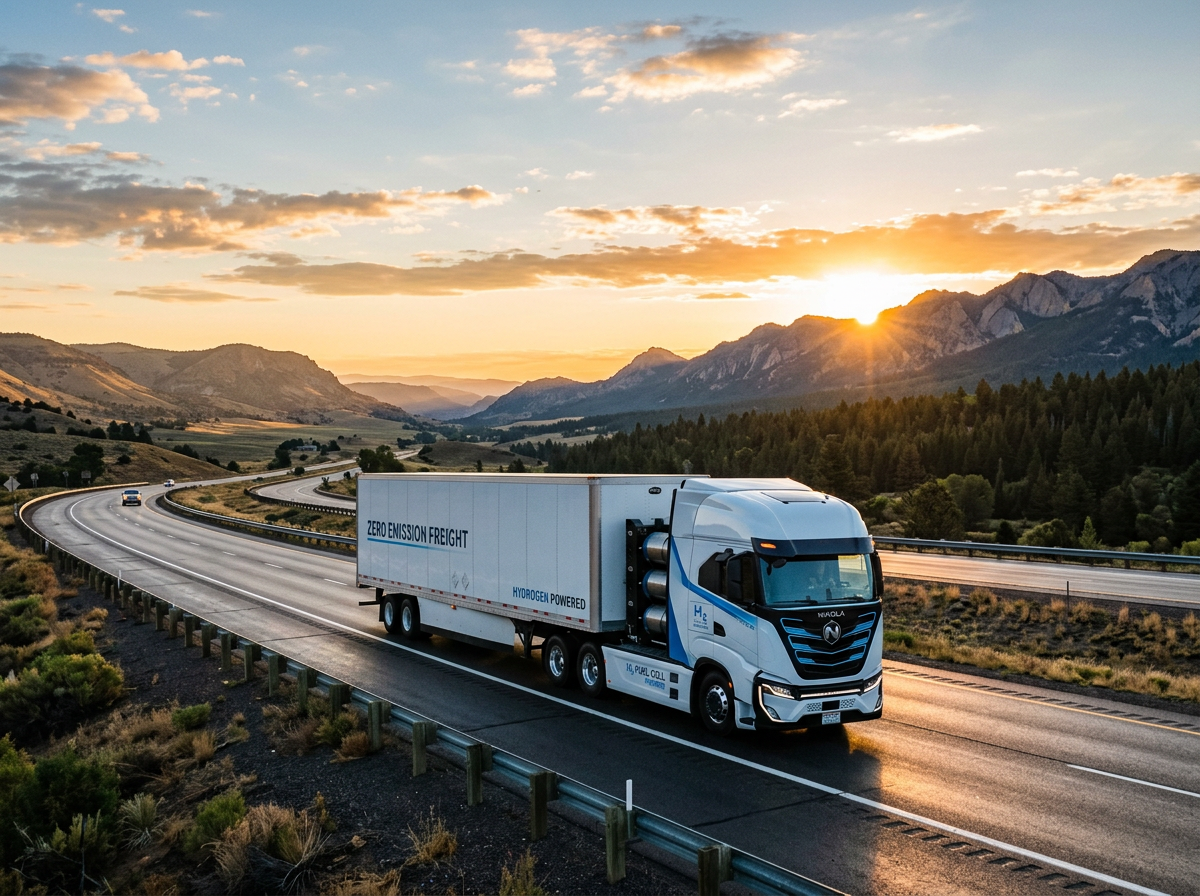
The roar of heavy diesel engines on the A7 motorway in Germany or the Via Baltica is slowly being replaced by a futuristic hiss. As of May 2026, the European dream of a carbon-free logistics corridor is moving from pilot projects to a massive industrial reality. We are witnessing the birth of the “Hydrogen Highway,” a network of refueling stations and high-tech trucks designed to move goods across the continent without leaving a trace of CO2.
What is a Hydrogen Fuel Cell Truck?
To understand this shift, we first need to define the Hydrogen Fuel Cell. Unlike a battery-electric car that stores electricity in large packs, a fuel cell truck acts like a miniature power plant on wheels. It takes onboard compressed hydrogen gas and combines it with oxygen from the outside air to create electricity.
The only exhaust from this process is pure water vapor. This technology is the holy grail for long-haul logistics because hydrogen tanks are much lighter than the massive batteries required to move a 40-tonne semi-trailer. In 2026, the latest models can travel over 800 kilometers on a single fill, which takes about 15 minutes, roughly the same time it takes a driver to grab a coffee at a rest stop in Poland or Lithuania.
The Baltic Connection and AFIR Regulations
The backbone of this revolution is a piece of European legislation called the Alternative Fuels Infrastructure Regulation (AFIR). As of 2026, this law mandates that hydrogen refueling stations must be available at least every 200 kilometers along the EU’s main transport arteries.
In the Baltics, this is changing everything. Latvia and Estonia have integrated these requirements into their national energy plans, ensuring that the Via Baltica becomes a “Green Corridor.” For a logistics company in Riga, this means they can finally invest in hydrogen fleets knowing they won’t get stranded halfway to Berlin. A key player in this space is the European joint venture h2-accelerate, which includes giants like Volvo and Daimler Truck. They are currently deploying hundreds of hydrogen trucks and stations across the North Sea-Baltic corridor, proving that heavy-duty decarbonization is no longer a “Western Europe only” luxury.
Green Hydrogen: The Fuel of the Future
Not all hydrogen is created equal. In 2026, the EU is strictly focused on Green Hydrogen. This is a technical term for hydrogen produced through Electrolysis, using renewable electricity from wind or solar power to split water into hydrogen and oxygen.
France and Germany are currently leading the production of this “clean gold.” In Northern Germany, massive offshore wind farms are feeding electrolyzers that pump green hydrogen directly into the new European Hydrogen Backbone. This is a repurposed and expanded pipeline network that will eventually connect the sunny solar farms of Spain with the industrial heartlands of the Baltics. By utilizing our existing gas infrastructure, Europe is significantly lowering the cost of the energy transition for every EU citizen.
Europe vs. Asia: Infrastructure vs. Innovation
The global race for hydrogen supremacy is a fascinating battle of strategies. While China currently has the largest fleet of hydrogen buses and light vehicles, their focus has largely been on urban transport. Europe, by contrast, has prioritized the “Heavy Duty” sector and cross-border interoperability.
While Asian manufacturers are focused on massive production scale, the EU is winning on Standards and Policy. Thanks to the EU Hydrogen Bank, a funding mechanism that auctions subsidies to producers, Europe has created a stable market that attracts global investors. While the US is catching up with its Inflation Reduction Act subsidies, Europe’s lead in integrated infrastructure means that a truck can cross five borders in the EU using the same refueling standards, something that remains a challenge in many other parts of the world.
The Road Ahead for EU Logistics
The transition to hydrogen is about more than just “saving the planet.” It is about Energy Sovereignty. By producing our own fuel from European wind and sun, we reduce our dependence on foreign oil and gas. For the truck driver in Latvia or the warehouse manager in France, the Hydrogen Highway represents a more stable, cleaner, and quieter future.
As we see more of these silent giants on our roads, do you think the higher initial cost of hydrogen technology is a fair price to pay for total energy independence from global oil markets?
Explore the Hydrogen Revolution:
- H2 Accelerate: The European Roadmap for Hydrogen Trucking
- European Commission: Alternative Fuels Infrastructure Regulation (AFIR)
- Daimler Truck: The GenH2 Liquid Hydrogen Prototype
#HydrogenHighways #GreenLogistics2026 #FuelCellTech #AFIR #Decarbonization #BalticTransport #CleanEnergyEU #FutureOfTrucking
Leave a Reply