
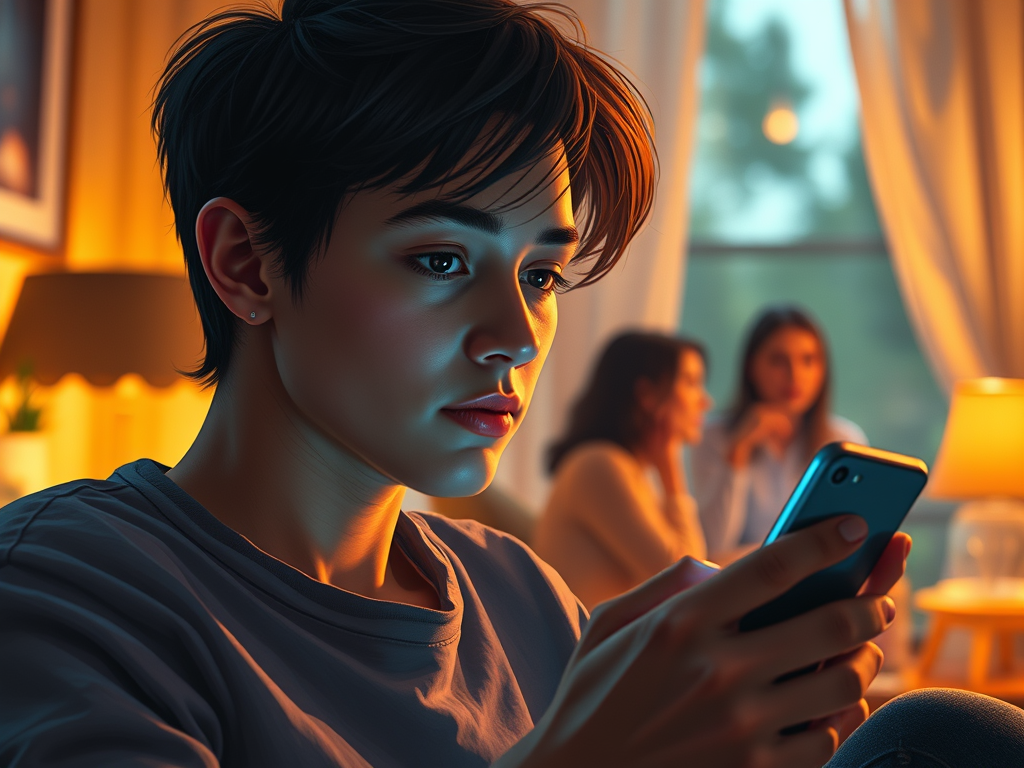
Not long ago, “going online” was a destination, a specific activity you did while sitting at a desk, tethered to a wall by a telephone wire. Today, the digital world isn’t somewhere we go; it is the atmosphere we breathe. From the moment we check our notifications at sunrise to the blue-light glow of our screens at midnight, our lives are a seamless blend of the physical and the virtual.
But as our bandwidth increases, the nature of our “Human Connection” is undergoing a radical transformation. We are more reachable than ever, yet many report feeling a strange, hollow sense of isolation. We are part of global communities, yet we struggle to maintain a deep conversation with the person sitting across from us.
We are currently navigating a “Great Convergence” a period where we are redefining what it means to be truly present with one another. Here is how our digital lives are reshaping the architecture of our relationships.
1. The Paradox of “Frictionless” Intimacy
In the physical world, connection requires Friction. It takes effort to coordinate a dinner, travel to a location, and commit to hours of undivided attention. This friction acts as a filter, ensuring that the relationships we maintain have depth and investment.
Digital connection is Frictionless. We can send a “like,” a heart emoji, or a quick “Thinking of you” text in seconds.
- The Benefit: Technology has effectively “killed distance.” It allows us to maintain long-term bonds across continents and find niche communities of like-minded souls that would be impossible to locate in a single zip code.
- The Cost: When connection becomes too easy, it risks becoming superficial. We often confuse “Staying in Touch” with “Staying Connected.” The dopamine hit of a notification can trick our brains into feeling socially satisfied, even when the interaction lacks the emotional weight of a real conversation.
2. The Rise of the “Synthetic Persona”
We are no longer just connecting with humans; we are beginning to connect with Synthetic Personas. With the rise of highly sophisticated AI companions and lifelike avatars, the line between “Tool” and “Friend” is blurring.
- The Experience: Digital entities are now capable of imitating human empathy, tone, and memory. For many, especially those in isolated environments, these AI partners provide a judgment-free space to process emotions.
- The Psychological Shift: Sociologists have noted a concept called “Alief” the gut feeling that a digital entity is “real” and “caring,” even when our rational brain knows it is just a complex model. As we get used to the “perfect” validation of an AI that never gets tired or angry, we may find the “messy” reality of human conflict harder to navigate.
3. “Networked Individualism” vs. Tightly Knit Community
The traditional model of human connection was built around the Village, a tightly knit, stable group of people who knew everything about each other. Today, we live in an era of Networked Individualism.
- The Shift: We are no longer defined by a single community. Instead, each of us sits at the center of our own personalized network of “weak ties” and “strong ties.” We have our “gaming friends,” our “work Slack circle,” and our “Instagram followers.”
- The Result: This provides incredible autonomy and freedom. You are no longer trapped by the opinions of your local neighborhood. However, it can lead to a sense of Fragmentation. When our social lives are spread across five different apps, it becomes harder to feel “whole” in any single community.
4. The “Attention Tax” on Presence
Perhaps the most visible change in our culture is the erosion of Shared Presence. We have all seen the “Table of Phubbers” friends out to dinner, all looking at their respective phones.
- The Science: Studies show that the mere presence of a smartphone on a table, even if it is turned off, reduces the perceived quality of a conversation. It serves as a constant reminder of the “elsewhere,” making us less likely to engage in the deep, spontaneous tangents that build true intimacy.
- The Adaptation: We are seeing a cultural backlash in the form of “Appstinence” and “Digital Detox” rituals. People are moving away from “More” connection and toward “Better” connection, prioritizing phone-free zones and intentional “In Real Life” (IRL) gatherings.
5. Vulnerability in a Curated World
Human connection is built on Vulnerability. We bond over our failures, our fears, and our unpolished truths. Digital life, however, rewards Curation.
On social media, we are encouraged to present a “Gallery Version” of our lives. When we interact through these polished filters, we aren’t connecting with people; we are connecting with “Brands.”
- The Fix: The most successful digital spaces are shifting toward “Authenticity-First” models, platforms that encourage raw, unedited glimpses into daily life. We are learning that the most shareable content isn’t the perfect vacation photo; it’s the honest confession that makes someone else say, “Me too.”
Reclaiming the Human Touch
The digital world isn’t going anywhere, nor should it. It has given us the tools to build a global family. But as we move forward, the goal is to use technology as a Bridge, not a Destination.
The future of connection lies in “Hybrid Literacy” knowing when to use the speed of a text and when to demand the presence of a person. In a world of infinite digital noise, the most “High-Value” thing you can offer someone isn’t a like or a comment. It is your undivided, analog attention.
Leave a Reply