
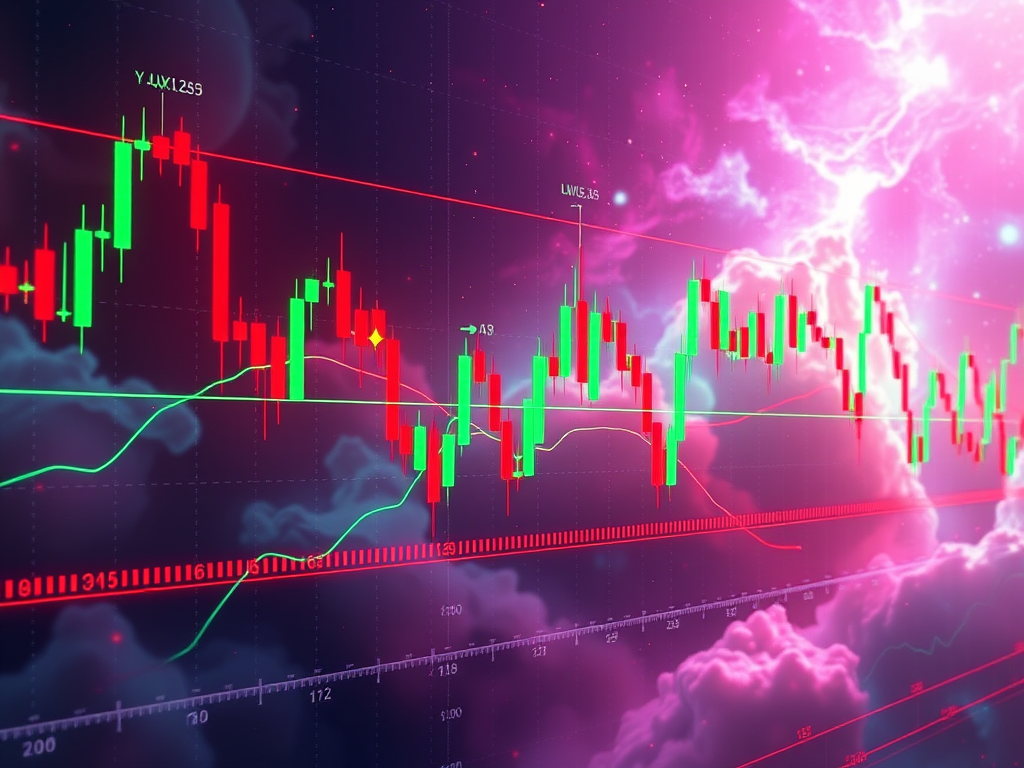
Have you ever opened a crypto chart and thought, “What am I even looking at?” You’re not alone. For many beginners, crypto charts look like a chaotic mess of red and green candles, mysterious squiggly lines, and confusing acronyms. But what if we told you that decoding these charts isn’t just possible—it’s the key to leveling up your crypto game?
Reading price charts isn’t just for hardcore traders or chart wizards. It’s a powerful skill that helps you understand the market’s mood, identify potential entry and exit points, and avoid panic during dips.
Let’s break down the fundamentals of reading crypto charts—so you can stop guessing and start trading with confidence.
🧠 Why Learn to Read Crypto Charts?
Crypto is volatile. Prices move fast. Hype comes and goes. If you rely only on headlines or gut feelings, you’re flying blind. Understanding price charts gives you:
- Clear insight into market trends
- Confidence in timing buys and sells
- Protection against emotional trading
- Tools to analyze historical and real-time data
No more panic-selling at the bottom or FOMO-buying at the top. With even basic chart-reading skills, you’re already ahead of most new investors.
🔍 Understanding the Basics: What’s on a Crypto Chart?
Before diving into indicators or patterns, let’s explore what you’re actually looking at.
1. Price Axis (Y-axis)
Usually on the right side, this shows the asset’s price levels.
2. Time Axis (X-axis)
Along the bottom, this shows time intervals—ranging from minutes to months.
3. Candlesticks
Each candlestick shows price action over a specific time frame. Here’s what each candle reveals:
- Body: The range between open and close prices
- Wick (or Shadow): The high and low during that time
- Color: Green (price went up), Red (price went down)
Understanding candles is like learning the alphabet of trading. Master it, and you’ll be reading fluently in no time.
🟢 Bullish vs. 🔴 Bearish: Recognizing the Trend
One of the first things you’ll want to do is determine the trend.
- Uptrend (Bullish): Higher highs and higher lows
- Downtrend (Bearish): Lower highs and lower lows
- Sideways (Consolidation): Price moves within a range
Zoom out to larger time frames (1-day or 1-week) to avoid being tricked by short-term noise.
⚙️ Time Frames: Choosing the Right Lens
Different charts serve different purposes:
- 1-minute to 15-minute: Day traders’ playground
- 1-hour to 4-hour: Great for swing trades or spotting short-term trends
- 1-day and above: Best for investors and trend-followers
Start with 1-day or 4-hour charts until you’re more comfortable.
📊 Indicators That Actually Help (No Clutter Needed)
Charts can be packed with indicators, but here are the ones that actually matter for beginners:
1. Moving Averages (MA & EMA)
Smooths out price to show trend direction. Common ones:
- 50-day MA (medium trend)
- 200-day MA (long-term trend)
If price is above the 200-day MA, it’s generally bullish.
2. Relative Strength Index (RSI)
Measures if an asset is overbought or oversold.
- Above 70: Overbought (possible correction)
- Below 30: Oversold (possible bounce)
3. Volume
The number of coins traded during a period. High volume = strong interest. Low volume = weak movement.
🔥 Patterns That Scream Opportunity (or Danger)
Price patterns appear again and again—because markets are driven by human psychology. Here are a few you’ll see often:
✅ Bullish Patterns:
- Cup and Handle: Gradual U-shaped recovery followed by breakout
- Ascending Triangle: Flat resistance + rising support = bullish breakout likely
- Double Bottom: Two support bounces = strong reversal signal
⚠️ Bearish Patterns:
- Head and Shoulders: A high flanked by two lower highs = reversal incoming
- Descending Triangle: Flat support + lower highs = possible breakdown
- Rising Wedge: Looks bullish but often breaks down hard
You don’t need to memorize them all—just get used to spotting the common shapes.
💡 Bonus Tip: Don’t Go Full Picasso
Many beginners load charts with 10+ indicators, turning them into abstract art. Resist the urge. Too many tools create conflicting signals and confusion.
Start simple:
- Candlestick chart
- 50-day and 200-day moving average
- RSI
- Volume
Keep it clean. Master the basics. You’ll be more accurate—and less stressed.
🧘♂️ Psychology Matters More Than Patterns
Charts help you spot opportunities, but don’t forget: you are your own worst enemy in trading.
Fear and greed can sabotage even the best strategies. Learning to read charts helps—but only if you stay disciplined. Set entry points, stick to your plan, and always use stop losses.
Trading is as much about emotional control as it is about technical analysis.
🛠 Tools You Can Use
There are plenty of free tools out there to help you practice chart reading:
- Charting platforms: Clean interfaces, tons of indicators
- Paper trading apps: Practice with no risk
- Educational YouTube channels: Free tutorials on chart patterns and indicators
Build your own system slowly. Don’t rush into trades with real money until you’ve trained your eye and your mind.
🎯 Final Thoughts: Charting Is Your Crypto Superpower
Understanding crypto charts isn’t some elite, secret skill—it’s a fundamental survival tool in the wild world of digital assets. Whether you’re looking to buy low, sell high, or just protect your portfolio, knowing how to read charts gives you an undeniable edge.
No more relying on hype tweets or Telegram “alpha.” No more guessing. When you read the charts yourself, you become independent, informed, and—eventually—profitable.
So go ahead, open that chart. Zoom in. Zoom out. Watch the candles dance.
Because now, you speak their language.
Leave a Reply