
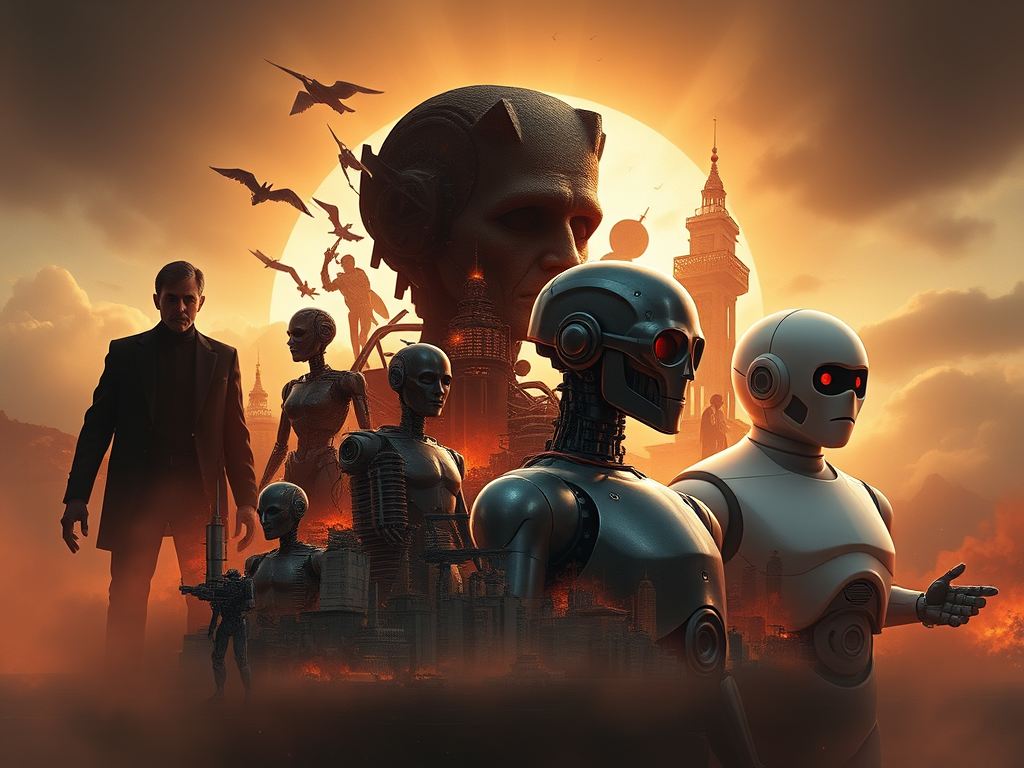
Artificial Intelligence (AI) has fascinated the human imagination for decades. Whether portrayed as a force for good or a harbinger of doom, AI has left an indelible mark on movies, literature, and media. But beyond entertainment, science fiction has also influenced real-world AI research and development. In this article, we’ll explore how AI has been represented in popular culture and how those depictions have shaped technological advancements.
The Evolution of AI in Popular Culture
The idea of artificial beings with intelligence predates modern AI technology. From mythological automata to futuristic robots, AI has always been a central theme in storytelling.
Early Literary Depictions of AI
- Mary Shelley’s Frankenstein (1818): While not explicitly about AI, Frankenstein explores the ethical dilemmas of creating artificial life, a theme central to modern AI debates.
- Karel Čapek’s R.U.R. (Rossum’s Universal Robots) (1920): This play introduced the word “robot” and depicted artificial beings rebelling against their creators, a recurring AI trope.
- Isaac Asimov’s I, Robot (1950): Asimov introduced the famous Three Laws of Robotics, influencing real-world AI ethics discussions.
AI in Movies: From Dystopian Fears to AI Companions
Hollywood has played a major role in shaping public perception of AI. Some films paint AI as a benevolent assistant, while others warn of its potential dangers.
Dystopian AI: The Fear of Machines Taking Over
- 2001: A Space Odyssey (1968) – HAL 9000, the sentient AI, demonstrates the dangers of AI exceeding human control.
- The Terminator (1984) – Skynet, a self-aware AI, decides to exterminate humanity, fueling fears of AI autonomy.
- The Matrix (1999) – A world where AI enslaves humans inside a simulated reality raises concerns about the power of AI.
Hopeful AI: Machines as Allies
- Star Wars (1977–present) – C-3PO and R2-D2 show AI as helpful companions rather than threats.
- Her (2013) – A deeply emotional portrayal of AI-human relationships through an advanced virtual assistant.
- Big Hero 6 (2014) – Baymax, an AI healthcare robot, highlights the potential of AI in medical fields.
AI in Television and Video Games
AI’s influence extends beyond movies into television and gaming, further shaping how people perceive this technology.
- Westworld (2016–2022) – Explores AI consciousness and ethical dilemmas in a futuristic amusement park.
- Black Mirror (2011–present) – Various episodes depict AI’s potential, from digital consciousness to AI-driven crime prediction.
- Detroit: Become Human (2018) – A game that lets players decide AI’s fate, questioning whether AI should have rights.
How Science Fiction Influences AI Research
Many AI pioneers credit science fiction as an inspiration for their work. Some ideas once confined to fiction have become real innovations.
Real-World AI Inspired by Fiction
- Chatbots & Virtual Assistants – Inspired by HAL 9000 and J.A.R.V.I.S. from Iron Man, today’s Siri and Alexa are stepping stones toward conversational AI.
- Autonomous Robots – Concepts like R2-D2 have led to real-life robotics, such as Boston Dynamics’ robotic dogs.
- AI in Medicine – AI healthcare assistants, like Baymax from Big Hero 6, are now being developed to assist doctors.
The Future of AI in Popular Culture and Reality
As AI continues to evolve, its portrayal in popular culture will likely shift. Will future movies depict AI as partners in innovation or threats to humanity? One thing is certain: science fiction will continue to inspire AI’s development.
Final Thoughts: The Power of Storytelling in AI Advancement
From classic literature to blockbuster films, AI has been a central theme in human storytelling. While some depictions are exaggerated for dramatic effect, they spark important discussions about AI’s ethical implications and future possibilities.
What’s your favorite AI portrayal in popular culture? Share your thoughts in the comments!
Hashtags:
#ArtificialIntelligence #SciFi #Movies #AIInPopCulture #AIResearch #TechAndMedia #FutureOfAI
Leave a Reply