
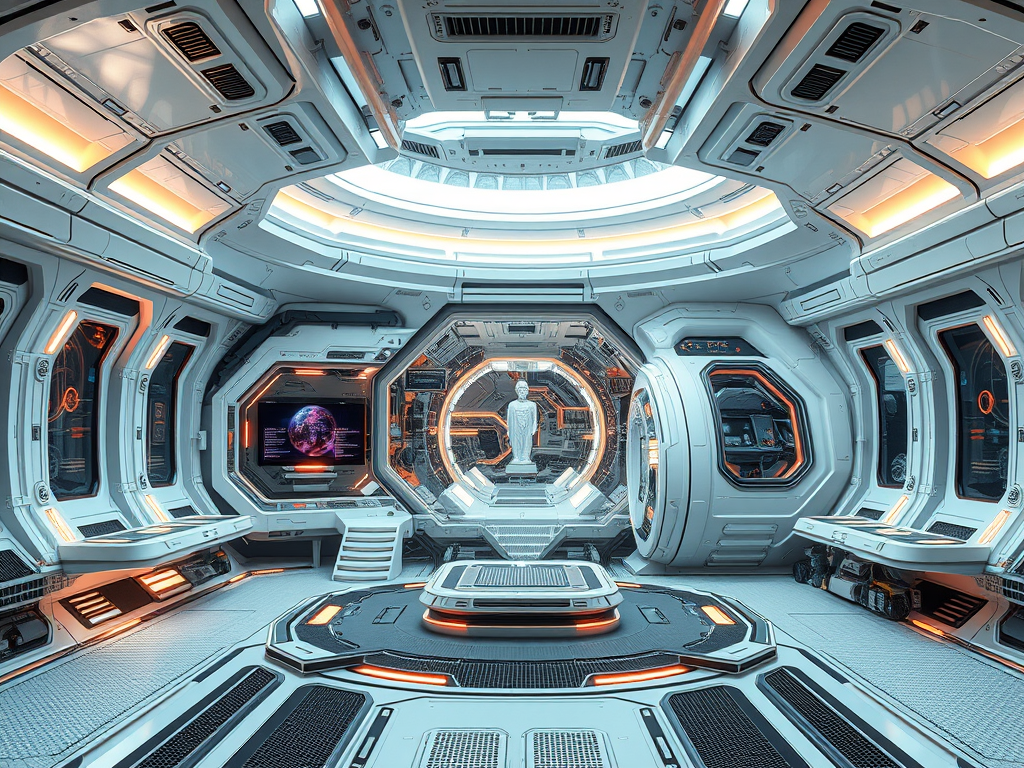
The dream of humanity living among the stars is no longer confined to science fiction. As we prepare to establish long-term outposts on the Moon and embark on missions to Mars, one of the most pressing questions is: what will our homes in space look like? The answer is not just about engineering, it’s about reimagining architecture, biology, and psychology for a world without gravity, atmosphere, or natural light.
Designing a habitat for zero gravity is a monumental challenge that forces us to abandon our terrestrial assumptions. On Earth, we build against gravity. In space, we build to live with its absence. This shift in perspective opens up a new frontier of design, where every component must serve multiple purposes and every inch of space is a precious resource. This post will explore the key design principles and groundbreaking innovations that will one day turn space into a habitable frontier.
The Fundamental Challenge: The Tyranny of the Void
A space habitat must be a self-contained, fortress-like ecosystem, capable of shielding its inhabitants from the unforgiving environment of space. The design process is defined by three primary threats: microgravity, radiation, and the vacuum.
- Microgravity: The absence of a constant gravitational pull poses the first and most immediate challenge. On a physiological level, microgravity leads to bone demineralization, muscle atrophy, and cardiovascular deconditioning. In a habitat, it means there is no “up” or “down,” complicating everything from simple tasks to waste management. Architects must design multi-directional spaces where floors can become walls and ceilings.
- Radiation: Beyond Earth’s protective magnetic field and atmosphere, humans are exposed to two types of deadly radiation: Galactic Cosmic Rays (GCRs) and solar flares. Prolonged exposure increases the risk of cancer and can cause neurological damage. A habitat must be a sophisticated shield, often requiring a multi-layered approach.
- The Vacuum: The complete absence of atmospheric pressure means a habitat must be a perfectly sealed pressure vessel. Any breach would be catastrophic. This requires materials with extreme tensile strength and redundant life support systems to ensure the integrity of the internal environment.
Every design choice, from the overall shape of the habitat to the materials used for its walls, is a direct response to these existential threats.
Pillar 1: Engineering the Shell – Structure and Shielding
The structural integrity of a space habitat is its first line of defense. Engineers are exploring a variety of innovative concepts to build structures that are both robust and lightweight, given the immense cost of launching mass into orbit.
- Modular and Expandable Design: The current model of space stations, like the ISS, involves launching individual modules and assembling them in orbit. Future habitats are likely to follow a similar approach but with a focus on more adaptable, inflatable structures. Concepts for expandable habitats, like those tested on the ISS, offer a compelling solution: they can be launched in a compact form and then expanded in orbit to provide a much larger living and working volume.
- Radiation Shielding: Protecting inhabitants from radiation is a complex puzzle. Conventional wisdom suggests using dense materials, but launching lead or steel is cost-prohibitive. Researchers are instead focusing on materials rich in hydrogen, which are highly effective at deflecting harmful radiation.
- “Water Walls”: One of the most promising concepts is to use water, a byproduct of life support systems, as a primary shielding material. Water is an excellent radiation shield and can be stored in the walls of a habitat, providing a passive, life-saving barrier.
- In-Situ Resources: For habitats on the Moon or Mars, the most efficient solution is to build with local materials. Lunar soil, or regolith, is an excellent radiation shield. Future habitats could be built underground or covered with a thick layer of regolith, providing natural protection from both radiation and micrometeoroids.
Pillar 2: Sustaining Life – Environmental Control and Life Support
A space habitat is more than just a shell; it is a meticulously balanced ecosystem. The Environmental Control and Life Support System (ECLSS) is the beating heart of a habitat, responsible for keeping its inhabitants alive and healthy.
- Air Revitalization: The ECLSS must continuously remove exhaled carbon dioxide and replenish the atmosphere with oxygen. On the ISS, this is accomplished through a combination of systems that use chemical absorbents and electrolysis (splitting water into hydrogen and oxygen). Future habitats will need even more closed-loop systems to reduce dependence on resupply missions from Earth.
- Water Management: Water is the single most important resource in space. A closed-loop water management system reclaims and purifies all water, including moisture from the air, urine, and wastewater. This complex process uses multi-filtration and purification systems to ensure every drop is recycled and safe for consumption.
- Food Production: The final frontier of life support is food. While all space missions to date have relied on pre-packaged food from Earth, long-term missions will require a sustainable food source. This is leading to research into hydroponic and aeroponic systems, where crops can be grown in microgravity without soil. These systems not only provide food but also contribute to air revitalization by absorbing carbon dioxide and producing oxygen.
Pillar 3: Designing for Humans – Psychology and Habitability
While engineering a safe and self-sufficient habitat is a massive technical feat, a successful habitat must also support the mental and social well-being of its crew. The long-term effects of isolation, confinement, and microgravity on the human psyche are a critical design consideration.
- The Importance of “Up” and “Down”: The absence of gravity can be disorienting. Designers must use architectural cues, such as color schemes, lighting, and internal layouts, to create a sense of directionality and spatial orientation.
- Communal and Private Spaces: A good habitat design balances communal areas for work and social interaction with private spaces for rest and solitude. Astronaut accounts from missions to the ISS highlight the importance of personal “nooks” or private quarters where crew members can retreat and recharge.
- Connection to Nature and Earth: Studies have shown that a connection to nature is vital for psychological well-being. Habitats may incorporate “biophilic design,” using live plants, natural textures, and a large viewport or “cupola” to offer a constant, awe-inspiring view of Earth and the stars. This not only provides a sense of connection but also a psychological “reset” from the monotony of the internal environment.
- Sensory Experience: The zero-gravity environment can be sensorially deprived. Habitat design must account for a variety of textures, colors, and even smells to create a rich, stimulating environment that prevents sensory monotony and fosters a sense of home.
The Future is Being Built Today
The future of space habitats is a mosaic of cutting-edge technology and human-centric design. Concepts like expandable modules, in-situ resource utilization, and sophisticated closed-loop systems are moving from the drawing board to reality. These innovations will not only make it possible for humanity to live beyond Earth but will also inspire solutions to some of the most pressing challenges we face on our own planet, from sustainable energy to closed-loop resource management.
Designing homes in zero gravity is the ultimate test of human ingenuity. It is an exploration of what it means to be human in the most inhospitable environment, and a testament to our relentless drive to explore, build, and settle new worlds.
We hope this glimpse into the future of space habitats has inspired you. What element of space habitat design do you find most fascinating? Share your thoughts in the comments below! If you found this post insightful, please share it, and for our new viewers, be sure to follow us to stay up to date on our latest content.
#SpaceHabitats #ZeroGravity #SpaceArchitecture #SpaceEngineering #HumanFactors
Leave a Reply