
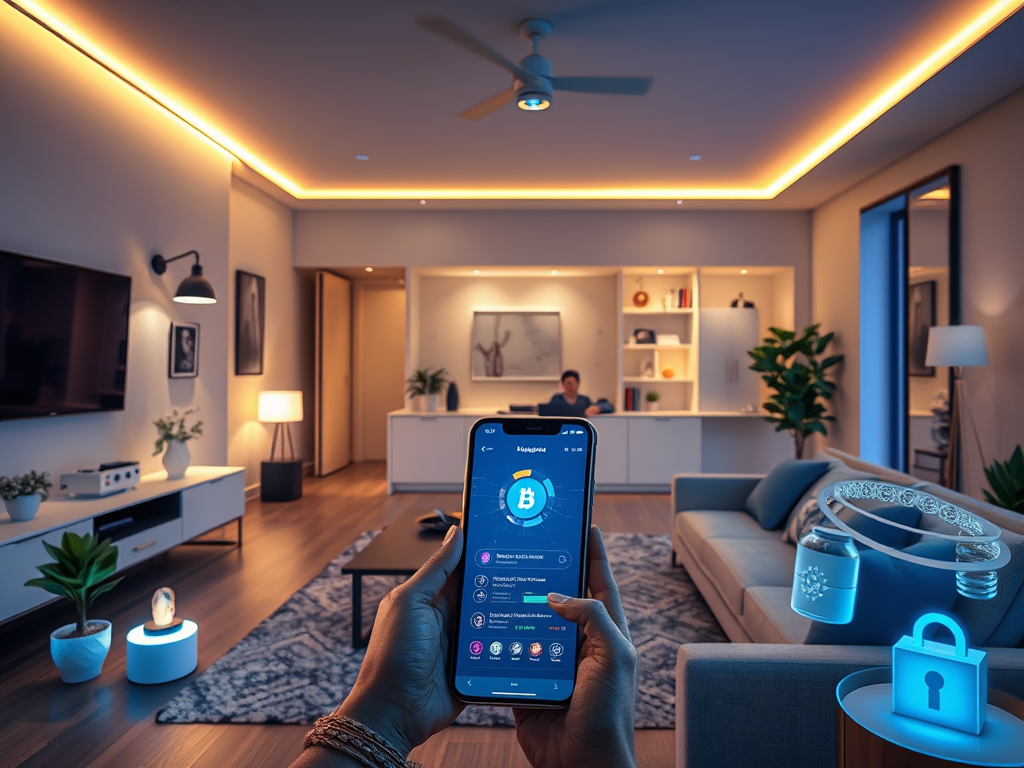
The concept of a “smart home” once sounded like science fiction. Today, it’s becoming a mainstream reality. Powered by AI, IoT (Internet of Things), and increasingly, blockchain and cryptocurrency, modern smart home systems offer seamless automation, security, and energy efficiency. But how do you build a smart home that’s both cutting-edge and decentralized?
This guide will walk you through designing a fully functional smart home system, integrating cryptocurrency and blockchain-based technologies, and preparing your household for a Web3 future.
Why Integrate Blockchain into Your Smart Home?
Traditional smart home systems rely on centralized servers for communication and control. This raises issues such as:
- Privacy concerns due to data being stored on third-party servers.
- Security risks from single points of failure.
- Limited control for homeowners.
Blockchain solves these issues with decentralized, transparent, and secure networks. Here are key benefits:
| Benefit | Description |
|---|---|
| Decentralization | Removes reliance on single vendors. Devices communicate directly. |
| Enhanced Security | Immutable ledgers make hacking more difficult. |
| Privacy | No central data storage means greater user anonymity. |
| Smart Contracts | Automate tasks like lighting and access without third-party approval. |
Components of a Smart Home System
To build a smart home, you’ll need:
- Smart Devices: Lights, thermostats, door locks, cameras, and appliances.
- Network Hub: Controls and connects all devices.
- Mobile App or Dashboard: Interface for managing systems.
- Voice Assistant: Optional, e.g., Alexa or Google Assistant.
- Power Supply: Backup systems for uninterrupted service.
Now, let’s explore how blockchain and crypto can be layered into each of these components.
Step 1: Choosing Blockchain-Compatible Devices
Not all smart devices support blockchain. Choose hardware that is:
- Open-source or supports blockchain-based firmware like Matter or Home Assistant.
- Compatible with IoTeX, Helium, or IOTA for decentralized communication.
These blockchains specialize in machine-to-machine interactions, a core part of smart homes.
Step 2: Integrating a Blockchain-Based Hub
Rather than using a central server like Google Home or Apple HomeKit, opt for decentralized hubs.
Examples:
- NKN: A decentralized data transmission network.
- Home Assistant on Raspberry Pi: Configurable and supports local control.
- IoTeX Ucam: Blockchain-secured home security cameras.
These hubs improve privacy and control while remaining user-friendly.
Step 3: Using Smart Contracts for Automation
Smart contracts can control home automation:
- Ethereum or Polygon smart contracts can handle access rights.
- Use Chainlink for real-world data integration (weather, pricing).
Example use case:
“If the home temperature rises above 26°C and it’s sunny, trigger smart blinds and reduce AC usage.”
This level of automation can be coded directly into smart contracts for optimal efficiency.
Step 4: Paying for Services with Crypto
Several home-related services now accept crypto payments. For example:
- Energy bills via SolarCoin.
- Internet via Helium Network Tokens (HNT).
- Device subscriptions or cloud backups via USDT, ETH, or BNB.
Start your crypto journey with a trusted platform:
Step 5: Data Storage and Privacy Management
Smart homes collect massive amounts of data. Blockchain allows you to store, secure, and even monetize that data:
- Use Filecoin or Arweave for distributed data storage.
- Monetize non-sensitive usage data via Ocean Protocol.
- Restrict access using smart contracts.
This setup ensures that only you control how your data is used.
Step 6: Security and Access Control
Blockchain-based identity systems (like Civic or Litentry) can be used to manage:
- Secure door access with NFT keys.
- Identity verification for guests.
- Logging entries and exits on immutable ledgers.
This approach removes dependency on passwords and reduces vulnerability to hacks.
Step 7: Powering Your Home with Tokenized Energy
If you’re into sustainability, integrate:
- Power Ledger to manage energy use and sell surplus.
- Grid+ to optimize pricing based on real-time blockchain data.
This is especially useful for solar panel owners who wish to tokenize and trade energy credits.
SEO Tips for Smart Home Builders
To improve your online visibility while documenting your smart home build:
- Use keyword-rich blog titles like “Decentralized Smart Home Setup Tutorial.”
- Add alt text to images (“IoTeX smart camera setup”).
- Publish your home automation smart contracts on GitHub for backlinks.
- Write reviews for blockchain-based smart home gadgets.
Future Trends in Blockchain Smart Homes
| Trend | Impact |
|---|---|
| AI + Blockchain Integration | Predictive automation with enhanced data security. |
| NFT Home Access | Temporary and tradable home access rights. |
| DAOs for Neighborhood Networks | Community-driven decision-making and security. |
The future of smart homes is democratic, decentralized, and driven by data you control.
Summary Checklist
- Install blockchain-compatible devices
- Set up a decentralized hub
- Automate with smart contracts
- Pay utilities and services with crypto
- Store data securely and privately
- Control access via blockchain ID
- Tokenize your energy usage
Final Thoughts
A blockchain-powered smart home is no longer a distant dream. By merging IoT with Web3, you gain control, security, and privacy while pushing your home into the future.
Whether you’re a tech enthusiast or a homeowner looking to enhance security and efficiency, this guide offers a solid foundation to begin building your decentralized smart haven.
Some links in this post are affiliate links. If you use them, I may earn a commission at no extra cost to you. Thank you for supporting Crypythone.com!
Join the Conversation
Have you started building your smart home with blockchain? What tools or platforms have you used? Share your thoughts and tips in the comments to help others in the Crypythone community!
Leave a Reply