
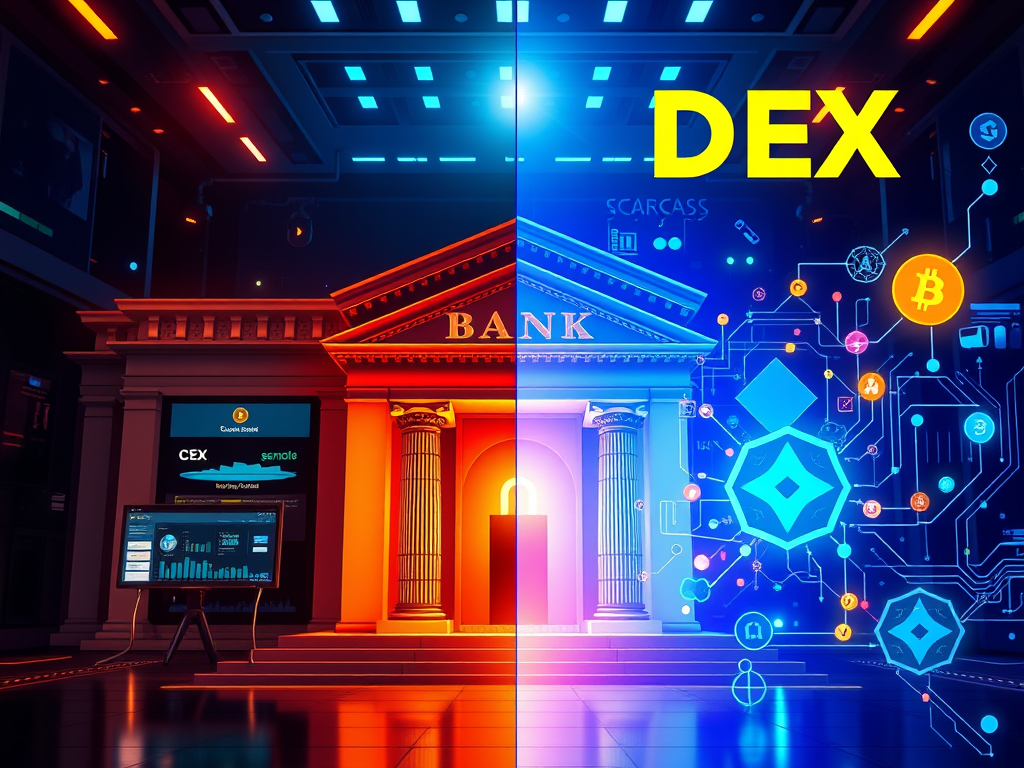
🚀 If you’re new to crypto, one of the first decisions you’ll face is choosing between a centralized exchange (CEX) and a decentralized exchange (DEX). Both have their pros and cons, and your choice will impact how you buy, trade, and store your digital assets.
But which one is better for beginners?
In this guide, we’ll explore:
✅ What centralized and decentralized exchanges are
✅ The key differences between CEXs and DEXs
✅ Pros and cons for beginners
✅ Which option is best for you?
Let’s dive in!
1. What Are Centralized Exchanges (CEXs)?
A centralized exchange (CEX) is a third-party platform that helps users buy, sell, and trade cryptocurrencies. It operates like a traditional stock exchange and is managed by a company that provides security, liquidity, and customer support.
📌 Examples of Popular CEXs:
- Binance 🌎 – One of the largest global exchanges
- Coinbase 🏛 – U.S.-based, beginner-friendly
- Kraken 🦑 – Known for security and regulatory compliance
- Bybit ⚡ – Popular for derivatives and futures trading
📊 How CEXs Work:
1️⃣ Users sign up and verify their identity (KYC – Know Your Customer).
2️⃣ Deposit funds using bank transfers, credit cards, or crypto wallets.
3️⃣ Trade cryptocurrencies through a user-friendly interface.
4️⃣ Withdraw funds back to a bank account or crypto wallet.
💡 Key Feature: CEXs act as intermediaries, making trading easy and convenient.
2. What Are Decentralized Exchanges (DEXs)?
A decentralized exchange (DEX) is a peer-to-peer marketplace where users trade crypto directly without an intermediary. Transactions are executed on a blockchain using smart contracts, providing greater privacy and security.
📌 Examples of Popular DEXs:
- Uniswap (Ethereum-based) 🦄 – Leading DeFi exchange
- PancakeSwap (BNB Chain-based) 🥞 – Fast & cheap trades
- dYdX ⚖ – Decentralized derivatives trading
- Raydium (Solana-based) ☀️ – High-speed, low-fee swaps
📊 How DEXs Work:
1️⃣ Connect your crypto wallet (e.g., MetaMask, Trust Wallet).
2️⃣ Swap tokens directly without needing an account.
3️⃣ Smart contracts execute trades without third-party involvement.
4️⃣ No KYC – you stay anonymous!
💡 Key Feature: DEXs give users full control over their assets, but require more technical knowledge.
3. CEX vs. DEX: Key Differences
Here’s a breakdown of the main differences between centralized and decentralized exchanges:
| Feature | Centralized Exchange (CEX) | Decentralized Exchange (DEX) |
|---|---|---|
| Ease of Use | ✅ Beginner-friendly, simple interface | ❌ Requires knowledge of wallets & blockchain |
| Security | ❌ At risk of hacks & exchange failures | ✅ No central authority, more secure |
| Control Over Funds | ❌ Exchange holds your crypto (custodial) | ✅ You control your private keys (non-custodial) |
| Liquidity | ✅ High liquidity & fast transactions | ❌ Lower liquidity, especially for new tokens |
| Trading Fees | ✅ Lower fees for large trades | ❌ Higher gas fees on some blockchains |
| Regulation & KYC | ✅ Requires ID verification (KYC) | ❌ No ID verification required |
| Variety of Assets | ✅ Wide selection of crypto & fiat trading | ✅ Supports newer, lesser-known tokens |
💡 Key Takeaway: CEXs are easier for beginners, while DEXs offer more security and control over funds.
4. Pros & Cons for Beginners
✅ Pros of Using a CEX (Best for Beginners)
✔ Easy to Use – Simple interfaces for buying and selling crypto.
✔ Fiat Support – Allows deposits via bank transfers, credit cards, and PayPal.
✔ Customer Support – Live chat and email support available.
✔ High Liquidity – Fast transactions with minimal slippage.
❌ Cons of Using a CEX
❌ Requires KYC (ID verification) – Some users prefer anonymity.
❌ Custodial (Not Your Keys, Not Your Coins!) – The exchange controls your funds.
❌ Regulation & Restrictions – Some countries ban or restrict CEX access.
✅ Pros of Using a DEX (For Advanced Users)
✔ Full Control – You own your private keys and funds.
✔ More Privacy – No KYC or ID verification needed.
✔ Access to New Tokens – Trade tokens before they list on CEXs.
✔ No Central Authority – Resistant to government bans or exchange shutdowns.
❌ Cons of Using a DEX
❌ Steep Learning Curve – Requires knowledge of crypto wallets and gas fees.
❌ No Customer Support – If you make a mistake, no one can help.
❌ Lower Liquidity – Some tokens may have high price slippage.
5. Which One Should Beginners Choose?
💡 Choose a CEX If:
✔ You’re new to crypto and want a simple, guided experience.
✔ You need to buy crypto using fiat (USD, EUR, etc.).
✔ You prefer customer support in case something goes wrong.
✔ You want fast and easy trading.
🎯 Best Option for Beginners: Coinbase, Binance, Kraken
💡 Choose a DEX If:
✔ You want full control over your funds (non-custodial).
✔ You’re interested in privacy and anonymous trading.
✔ You trade low-market-cap or newly launched tokens.
✔ You’re comfortable using crypto wallets and DeFi platforms.
🎯 Best Option for Advanced Users: Uniswap, PancakeSwap, dYdX
Final Thoughts: CEX or DEX – What’s the Best for Beginners?
🔹 If you’re a beginner, start with a CEX. It’s easier to use, supports fiat deposits, and provides customer service.
🔹 Once you’re comfortable, try using a DEX. This gives you more control over your crypto and access to DeFi opportunities.
🔹 Both CEXs and DEXs have their place. Many experienced traders use both depending on their needs!
🚀 Which do you prefer – CEX or DEX? Drop your thoughts in the comments!
🔗 Follow Crypythone.com for expert crypto insights! 🚀
(The post contains referral links that provide bonuses for new users)
#CryptoTrading #CEXvsDEX #Bitcoin #Ethereum #Web3 #CryptoInvesting #DecentralizedFinance
Leave a Reply