Imagine trying to teach a toddler what a “dog” is. You don’t give them a 500-page manual on canine anatomy. You simply point at a golden retriever and say, “Dog.” Then you point at a cat and say, “Not a dog.” After a few dozen examples, the child’s brain begins to recognize the patterns, the wagging tail, the floppy ears, the specific bark.
Artificial Intelligence learns in a way that is surprisingly similar, yet unimaginably more massive. It doesn’t “think” like we do, but it mimics the way our neurons fire to solve problems. In a world where AI is becoming the invisible engine behind our phones, our cars, and our jobs, understanding how it learns is no longer just for scientists, it is the ultimate literacy for the modern era.
At Feereet, we are dedicated to peeling back the layers of complex technology. We believe that when you understand the “how,” you lose the fear and gain the edge. Today, we’re going to unbox the digital brain.
1. The Foundation: The Digital Switchboard
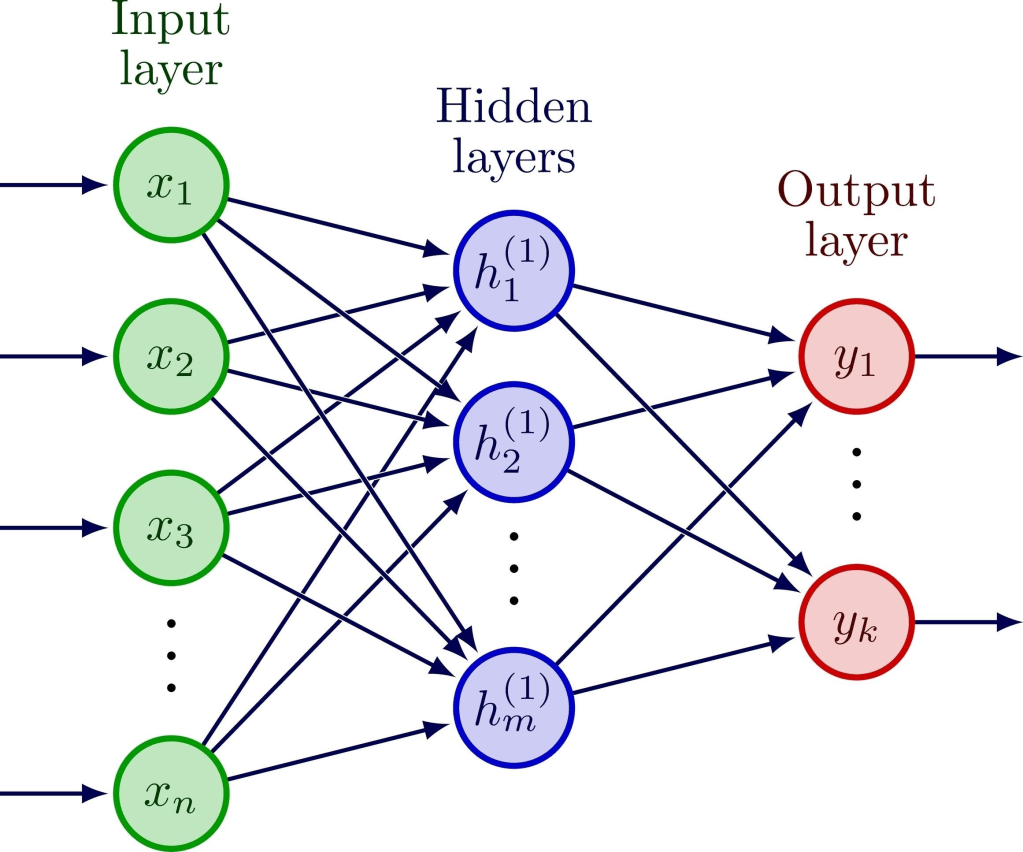
At the core of AI is something called a Neural Network. Think of this as a giant digital switchboard with millions, or even billions, of tiny knobs. These “knobs” are what scientists call Parameters.
When an AI starts its journey, all these knobs are turned to random positions. It knows nothing. To make it smart, we put it through “Pre-training.” We feed it a digital version of the entire world’s library, billions of pages of text, code, and conversation.
The AI’s goal during this phase is simple but grueling: Predict the next word. If the AI sees the sentence “The cat sat on the…”, it tries to guess the next word. If it guesses “refrigerator,” it gets a metaphorical “nudge” that it was wrong. If it guesses “mat,” the knobs are tightened in that direction. Mathematically, this process of adjusting the “knobs” (weights and biases) looks like this:
y=f(∑wixi+b)
In this formula, w represents the Weight (how much importance to give a certain piece of data) and b is the Bias. By repeating this billions of times, the AI starts to understand not just grammar, but logic, humor, and even basic reasoning.
2. The Pattern Recognition Engine
AI doesn’t actually “know” what a cat is; it knows the statistical probability of “cat-ness.”
When an image-based AI learns to see, it breaks a picture down into tiny pixels.
- Layer 1: Detects simple lines and edges.
- Layer 2: Combines lines into shapes (circles, triangles).
- Layer 3: Recognizes complex features (eyes, ears, fur).
- Final Layer: Concludes with a percentage of confidence: “98% Dog.”
This is why AI can sometimes “hallucinate.” If it sees a cloud that looks remarkably like a face, its pattern-matching brain might insist it is a face, simply because the statistical math says so.
3. The Human Touch: Reinforcement Learning (RLHF)
If we stopped at pre-training, the AI would be a genius, but a very weird one. It would mimic everything it found on the internet, the good, the bad, and the toxic. To make it helpful and safe, we use Reinforcement Learning from Human Feedback (RLHF).
This is the “Teacher in the Room” phase. Human trainers are given two different answers generated by the AI and asked to rank them.
- Response A: Accurate but rude.
- Response B: Accurate, polite, and clear.
The human chooses B, and the AI’s “reward model” learns that “polite and clear” leads to success. This is how we align a machine’s cold logic with human values. We are essentially giving the AI a moral and social compass.
4. Moving Toward Agency: The Future of Learning
We are now moving beyond AI that just “answers” and toward AI that “acts.” This is known as Agentic AI.
Instead of just learning from a static dataset, these new systems are learning to use tools, like browsing the web, using a calculator, or even writing their own code to solve a problem they’ve never seen before. They are moving from being a digital library to being a digital intern.
The Evolution of You and Feereet
The story of AI learning is ultimately a story about the power of feedback. Just as the machine refines its parameters to become more accurate, we as humans must refine our understanding to stay relevant.
At Feereet, our mission is to be your “reward model” for information. We filter through the noise to bring you the high-value insights that actually matter for your growth and purpose. The more the machines learn, the more important it becomes for us to stay curious.
If you could “pre-train” your own brain on any one subject overnight, what would it be?

Leave a Reply