
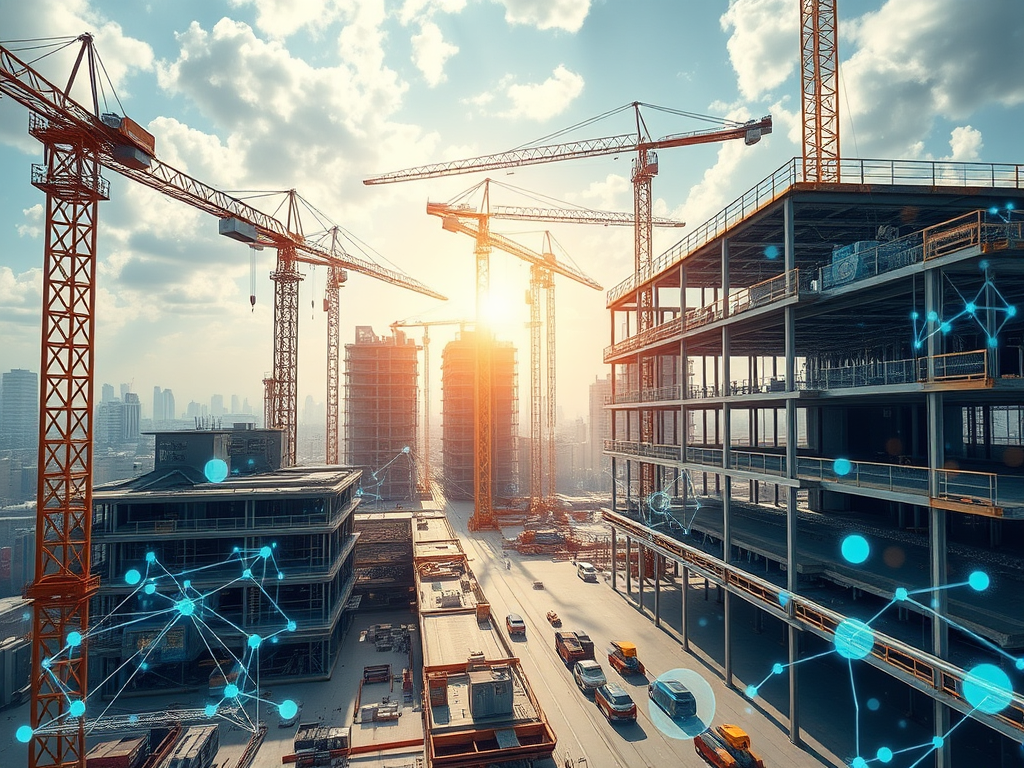
The construction industry has long been considered slow to adopt digital transformation. However, with the advent of emerging technologies like blockchain and digital twins, we are witnessing a paradigm shift. These innovations are not just buzzwords; they represent a fundamental change in how construction projects are designed, executed, monitored, and maintained. At Crypythone.com, we explore the dynamic synergy between digital twins and blockchain technology, examining their combined impact on the construction industry and how they contribute to smarter, more transparent, and efficient infrastructure development.
What Are Digital Twins?
Digital twins are virtual representations of physical assets, systems, or processes. In construction, a digital twin mirrors a building or infrastructure project, incorporating real-time data collected from sensors, drones, and IoT devices. This digital model evolves with the physical structure, allowing stakeholders to monitor progress, simulate scenarios, and optimize performance throughout the asset’s lifecycle.
Key characteristics of digital twins in construction:
- Real-time synchronization with physical counterparts
- Predictive analytics for proactive maintenance
- Visual modeling for stakeholder collaboration
- Lifecycle tracking from planning to decommissioning
Understanding Blockchain in Construction
Blockchain is a decentralized ledger that records transactions across multiple computers securely and immutably. In the construction industry, blockchain offers transparency, security, and automation through smart contracts.
Benefits of blockchain in construction:
- Immutable recordkeeping for contracts, permits, and approvals
- Smart contracts to automate payments and enforce project milestones
- Decentralized data sharing among stakeholders
- Fraud prevention and increased accountability
The Intersection of Digital Twins and Blockchain
The integration of digital twins and blockchain in construction creates a digital ecosystem where every event and change is recorded and visualized in real-time. This synergy provides an unparalleled level of control, security, and efficiency.
Key benefits of combining these technologies include:
- Enhanced Data Integrity
- Digital twins rely on accurate data. Blockchain ensures that this data remains tamper-proof and verifiable across the supply chain.
- Automated Workflows
- Smart contracts linked to digital twin milestones can automatically trigger payments or alerts, reducing administrative overhead and disputes.
- Transparent Auditing
- Project history, from material sourcing to final inspections, is immutably logged and available for verification.
- Real-Time Collaboration
- Stakeholders access synchronized data via a single source of truth, reducing miscommunication and delays.
- Sustainability Tracking
- Environmental impact data can be collected, tracked, and reported through the twin-blockchain system.
Use Case Scenarios
1. Smart Cities Infrastructure
- Digital twins represent entire neighborhoods, enabling planners to simulate traffic, energy use, and public safety scenarios. Blockchain ensures data from sensors and municipal agencies is secure and reliable.
2. Large-Scale Construction Projects
- In megaprojects, data from thousands of components and subcontractors can be monitored via digital twins, while blockchain handles contract execution, payment certification, and compliance tracking.
3. Maintenance and Asset Management
- After construction, digital twins help manage the facility’s lifecycle. Blockchain records all maintenance logs, part replacements, and performance metrics.
Challenges to Adoption
While the potential is massive, the integration of digital twins and blockchain faces several hurdles:
- Data standardization across platforms
- High initial investment in infrastructure and training
- Interoperability among legacy systems and new technologies
- Cybersecurity concerns
Despite these challenges, early adopters are already seeing significant ROI in terms of efficiency, reduced errors, and improved stakeholder satisfaction.
Future Outlook: Towards Autonomous Construction Systems
Looking ahead, the convergence of AI, blockchain, and digital twins may give rise to autonomous construction ecosystems. Picture a future where:
- AI analyzes digital twin simulations to optimize designs
- Smart contracts autonomously procure materials
- Drones and robots execute work orders based on real-time data
- Blockchain logs every step for legal and compliance purposes
This vision is closer than many think. As blockchain becomes more scalable and digital twin platforms more intelligent, their intersection will redefine not just how we build, but how we envision infrastructure.
Getting Started: Tools and Platforms
If you’re considering diving into this transformative landscape, start with the right tools:
- Digital Twin Platforms: Autodesk Tandem, Bentley iTwin, Siemens NX
- Blockchain Networks: Ethereum, Hyperledger Fabric, VeChain
- Integration Services: IBM Blockchain Services, Oracle Blockchain, Microsoft Azure Digital Twins
Binance and the Future of Construction Tokenization
Blockchain’s financial capabilities extend to asset tokenization. Companies can raise capital for construction projects via token sales, and investors can hold fractional ownership of infrastructure. Platforms like Binance are at the forefront of enabling such decentralized finance innovations.
👉 Register with Binance to explore how blockchain technology supports industries beyond finance, including construction.
Some links in this post are affiliate links. If you use them, I may earn a commission at no extra cost to you. Thank you for supporting Crypythone.com!
Final Thoughts: Building Smarter, Together
Digital twins and blockchain are not isolated innovations; they are converging to reshape the construction industry. Their integration brings transparency, efficiency, and intelligence to every stage of the project lifecycle. As these technologies mature, they offer unprecedented opportunities to reduce costs, mitigate risks, and build sustainably.
We’re only beginning to scratch the surface. As more stakeholders adopt and innovate within this space, we’ll see faster, safer, and smarter building processes become the norm rather than the exception.
We invite you to share your thoughts, experiences, or questions in the comments below. Have you implemented digital twins or blockchain in your construction projects? Let’s learn from each other and shape the future of construction technology together.
#BlockchainInConstruction #DigitalTwins #SmartInfrastructure #ConstructionTech #Crypythone
Leave a Reply