
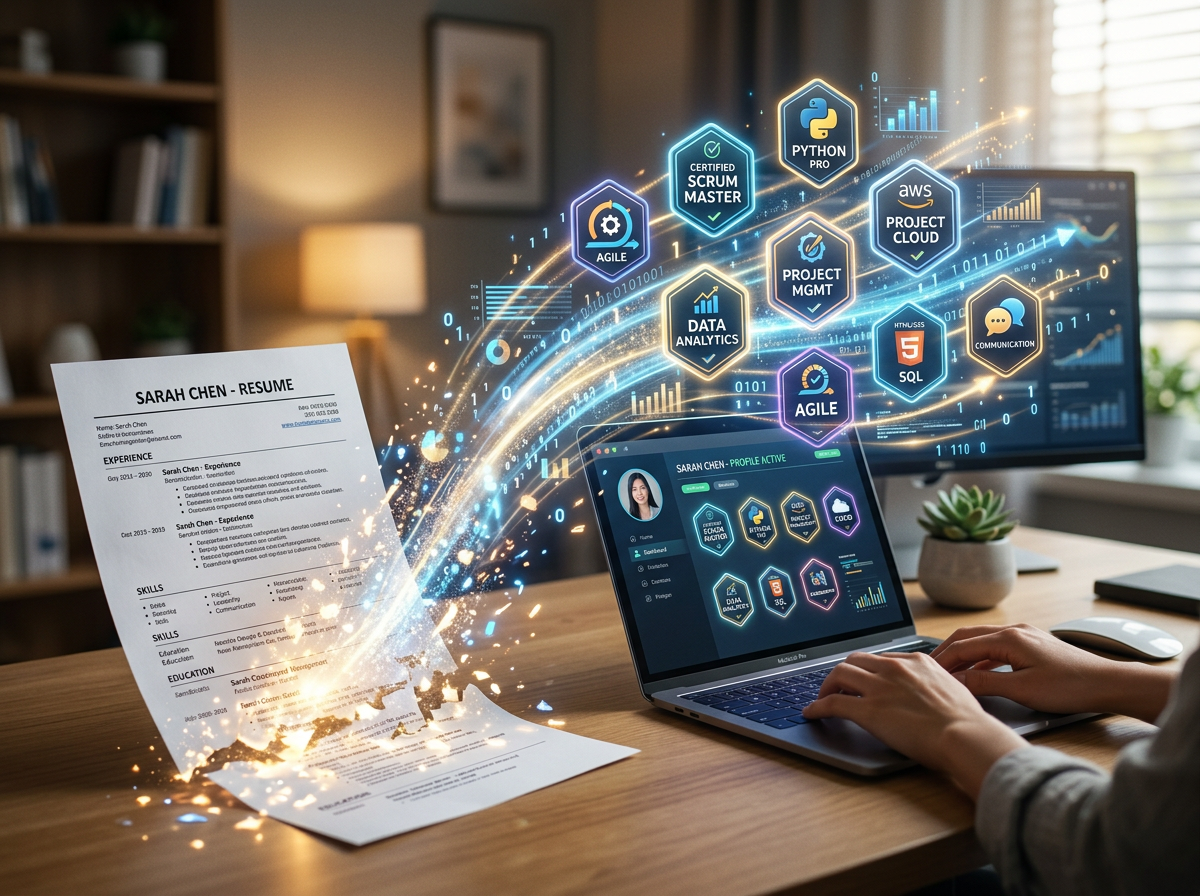
In 2026, the traditional university diploma is no longer the only ticket to a successful career in Europe. As technology moves faster than a four-year curriculum can keep up with, a new digital tool has emerged to help workers stay relevant. Known as Micro-Credentials, these bite-sized certifications are becoming the preferred way for Europeans to prove their expertise and switch careers without returning to school for years.
What Exactly are Micro-Credentials?
A Micro-Credential is a record of the learning outcomes a student has acquired following a small volume of learning. Think of it as a digital badge that proves you have mastered a very specific skill, such as “Ethical AI Prompting” or “Green Hydrogen Management.” Unlike a traditional degree, which covers a broad range of subjects over several years, a micro-credential can often be completed in a few weeks or even days.
These digital badges are designed to be “stackable.” This means you can collect multiple credentials over time from different institutions and combine them into a comprehensive Skills Passport. This passport provides a real-time, verified map of what you can actually do, rather than just where you went to school. In the eyes of a modern recruiter, this is a much more accurate way to measure talent in a fast-changing economy.
The European Way: Quality and Portability
Europe has taken a unique approach to this trend through the Council Recommendation on Micro-Credentials. This policy ensures that a certificate earned in Latvia is recognized by an employer in Germany or a university in France. This is possible because all EU micro-credentials must follow a common standard for transparency and quality assurance.
For a citizen in the Baltics, this is a game changer. In Estonia, the national education portal already integrates these digital credits into your official record. If you take a certified course in cybersecurity from a polytechnic in Tallinn, that credit is instantly visible to a startup in Berlin looking for talent. This Interoperability, the ability of different systems to work together and share information, is what makes the European labor market increasingly flexible and resilient.
Europe vs. the US: Standards vs. the Wild West
The European model for micro-credentials differs significantly from the landscape in the United States. In the US, the market is largely driven by private tech giants like Google or Amazon offering their own proprietary certificates. While these are valuable, they lack a unified national standard, which can make it difficult for employers to compare a “Google Career Certificate” with a traditional community college credit.
In contrast, the EU focuses on Public-Private Partnerships. European universities are working alongside industry leaders to co-create these small courses. For example, the EIT Digital (European Institute of Innovation and Technology) offers micro-credentials that are backed by academic rigor but designed for immediate industrial use. This ensures that the “currency” of your skills passport remains valuable across the entire Union, not just within a single company’s ecosystem.
Empowering the Workforce in 2026
By 2026, the European Digital Identity Wallet has become the primary home for these credentials. Every EU citizen can now store their verified diplomas and skills badges in a secure app on their phone. When applying for a job, you simply share a QR code that proves your qualifications without ever needing to print a paper CV.
In countries like Germany and France, the government is even providing “Individual Learning Accounts” to help citizens fund these short courses. This is part of the European Skills Agenda, a massive policy effort to ensure that the transition to a green and digital economy doesn’t leave anyone behind. Whether you are a 25-year-old developer or a 45-year-old manager, the goal is to make lifelong learning a seamless part of your lifestyle.
The Future of the Resume
As we move toward a more automated world, the ability to rapidly acquire and prove new skills is the ultimate competitive advantage. The traditional degree will likely always have its place for deep foundational knowledge, but the skills passport is what will keep your career moving in the intervals between major milestones.
If you could earn a verified digital badge in any high-tech skill in just two weeks, which one would you choose to add to your skills passport today?
Learn more about the future of learning:
- European Commission: A European approach to micro-credentials
- Europass: The digital home for your skills and qualifications
- EIT Digital: Short courses for digital transformation
#MicroCredentials #FutureOfWork #SkillsPassport #EUEducation #LifelongLearning #DigitalNomad #CareerTech2026
Leave a Reply