
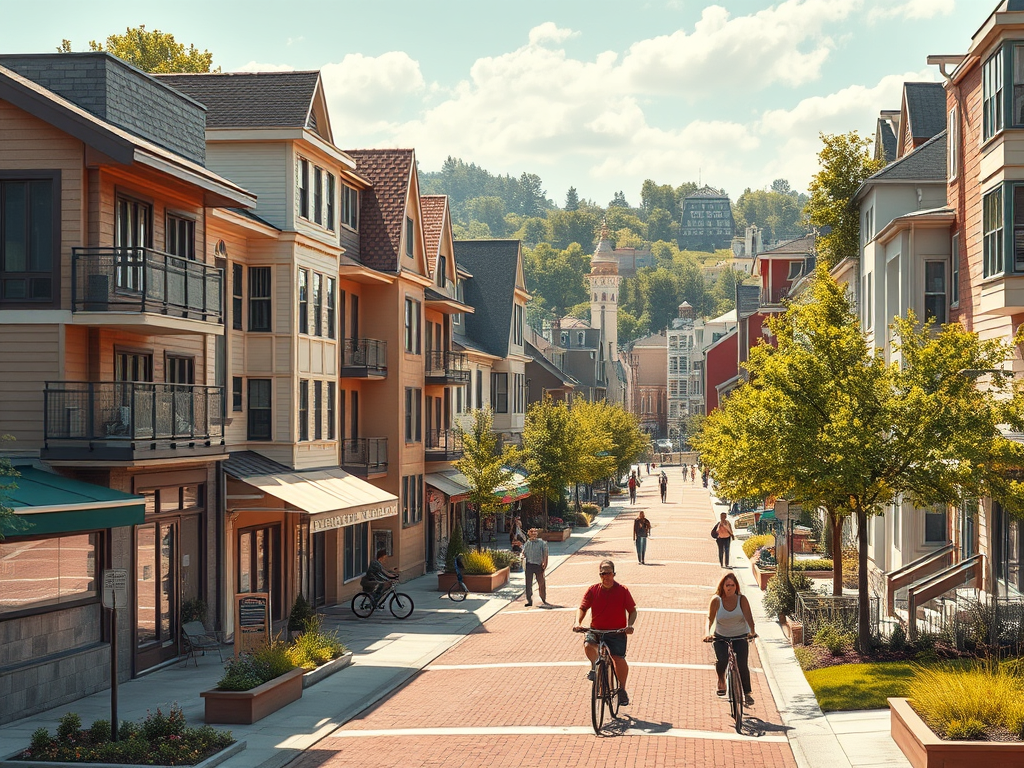
Imagine a city where everything you need for daily life, your job, your grocery store, the kids’ school, a park, a doctor’s office, even a great restaurant, is just a short walk or bike ride away. No more endless commutes stuck in traffic. No more sprawling suburbs where every errand requires a car. This isn’t a utopian dream, it’s the core philosophy behind the 15-Minute City, a transformative urban planning concept gaining traction around the globe.
Born from the ideas of urbanist Carlos Moreno, the 15-minute city (or “Ville du quart d’heure” in French) proposes a radical yet intuitive shift in how we design and inhabit our urban spaces. It’s about prioritizing people over cars, fostering local living, and creating vibrant, self-sufficient neighborhoods where quality of life takes precedence. As cities grapple with environmental challenges, public health crises, and the ongoing demand for sustainable development, this model offers a compelling vision for a more livable and resilient urban future.
This article will delve into the rise of the 15-minute city, exploring its foundational principles, the profound benefits it promises for residents and the environment, and the challenges and misconceptions that stand in the way of its widespread adoption.
The Heart of the Concept: Proximity, Diversity, and Density
At its core, the 15-minute city is built on three foundational pillars:
- Proximity: The idea that all essential services and amenities should be accessible within a short walk or bike ride (typically 15 minutes) from any resident’s home. This includes:
- Living: Diverse housing options for all income levels.
- Working: Local employment opportunities, co-working spaces.
- Commerce: Grocery stores, local shops, restaurants, markets.
- Healthcare: Clinics, pharmacies, doctors’ offices.
- Education: Schools, libraries, community learning centers.
- Culture & Leisure: Parks, sports facilities, theaters, cafes. This significantly reduces the reliance on private vehicles.
- Diversity: The creation of mixed-use neighborhoods where residential, commercial, and public spaces are interwoven. This multi-functional design brings life to an area throughout the day and night, supporting local businesses and fostering a sense of community. It moves away from zoning policies that separate living, working, and shopping into distinct, car-dependent zones.
- Density (Appropriate): This doesn’t necessarily mean high-rise buildings everywhere, but rather a thoughtful density that supports local businesses and public transport, making services viable within walking distance. It’s about making efficient use of urban space to bring amenities closer to people.
The result is a network of vibrant, polycentric neighborhoods, each offering a rich array of services and experiences, interconnected by efficient public transport and safe pedestrian and cycling routes.
A Multitude of Benefits: Why Cities are Embracing This Vision
The appeal of the 15-minute city isn’t just theoretical; it promises tangible improvements across various aspects of urban life.
- Environmental Sustainability:
- Reduced Emissions: Less reliance on cars means significantly fewer greenhouse gas emissions, contributing to cleaner air and combating climate change.
- Green Spaces: The emphasis on walkability often goes hand-in-hand with an increase in parks, urban gardens, and tree-lined streets, enhancing biodiversity and mitigating urban heat islands.
- Resource Efficiency: Encourages a more localized economy, potentially reducing the carbon footprint associated with goods transportation.
- Enhanced Public Health and Well-being:
- Active Lifestyles: With destinations within walking or cycling distance, residents naturally incorporate more physical activity into their daily routines, combating sedentary lifestyles and chronic diseases.
- Improved Air Quality: Fewer cars mean less pollution, leading to better respiratory health for city dwellers.
- Mental Health: Reduced commute stress, more time outdoors, and increased social interaction within communities contribute to better mental well-being.
- Stronger Communities and Social Equity:
- Local Cohesion: Increased foot traffic and shared public spaces foster stronger community ties, encouraging chance encounters and social interaction.
- Accessibility for All: Prioritizes pedestrians, cyclists, and public transport, making cities more accessible for those who don’t drive, including children, the elderly, and individuals with disabilities. This promotes greater equity in accessing essential services.
- Support for Local Businesses: Residents are more likely to frequent local shops, cafes, and services when they are conveniently located, boosting local economies and creating jobs.
- Economic Resilience:
- Reduced Transportation Costs: Households save money on fuel, car maintenance, and parking.
- Efficient Urban Development: Focuses on optimizing existing infrastructure and infill development, rather than costly urban sprawl.
- Increased Property Value: Desirable, walkable neighborhoods with abundant amenities often command higher property values.
Global Inspiration: Cities Leading the Way
The 15-minute city concept is being adapted and implemented in various forms around the world, showcasing its versatility.
- Paris, France: Mayor Anne Hidalgo has championed the “Ville du quart d’heure” as a cornerstone of the city’s urban plan. Efforts include transforming streets, creating more green spaces, and converting existing infrastructure (like schoolyards) into public spaces after hours.
- Melbourne, Australia: The city is developing “20-minute neighborhoods,” a slightly broader but similar concept, aiming for residents to meet most of their daily needs within a 20-minute walk or bike ride.
- Portland, USA: Known for its highly walkable neighborhoods and strong public transit system, Portland has long embraced principles that align with the 15-minute city, focusing on mixed-use development and community hubs.
- Barcelona, Spain: The “Superblocks” initiative groups several city blocks into larger units, diverting through-traffic to the periphery and reclaiming interior streets for pedestrians, cyclists, and community use, effectively creating smaller 15-minute zones.
- Bogotá, Colombia: While facing significant challenges, Bogotá has made strides in promoting cycling infrastructure and mixed-use development, moving towards a more human-scaled urban experience.
These examples demonstrate that while the specific implementation varies, the core vision of accessible, vibrant, local living resonates across diverse urban landscapes.
Navigating the Crossroads: Challenges and Misconceptions
Despite its compelling benefits, the 15-minute city concept has faced its share of scrutiny, both practical and ideological.
- Feasibility and Equity: One of the main challenges is how to implement this model fairly across all urban areas. Densely populated city centers might find it easier, but sprawling suburbs, with their car-dependent infrastructure and vast distances, present a more complex transformation. There’s a critical need to ensure that creating 15-minute neighborhoods doesn’t lead to “luxury urbanism” that only benefits affluent areas, pushing out lower-income residents.
- “Conspiracy Theories” and Misinformation: Unfortunately, the concept has been targeted by misinformation campaigns, falsely linking it to forced lockdowns, restrictions on personal movement, or even “climate change lockdowns.” It is crucial to clarify that the 15-minute city is about convenient access and choice, not about restricting movement. Its goal is to reduce the necessity of car travel, not to ban it.
- Cost and Political Will: Transforming urban infrastructure is an expensive and long-term endeavor. It requires significant financial investment in public transport, cycling lanes, pedestrian zones, and community facilities. It also demands strong political will and sustained commitment from local governments, often against resistance from established car-centric lobbies or residents accustomed to their current way of life.
- Balancing Local and Global Needs: While promoting local living is key, cities are also global hubs. The challenge lies in creating self-sufficient neighborhoods without isolating them from the broader metropolitan or global economy. Efficient transport networks between 15-minute zones remain crucial.
Conclusion: A Human-Centered Vision for Urban Evolution
The 15-minute city is more than just an urban planning trend; it’s a paradigm shift in how we envision our relationship with the places we live. It’s a call to move beyond the car-dominated landscape of the last century and embrace a future where efficiency, sustainability, and human connection are at the heart of urban design.
While the path to widespread adoption will be complex, filled with both practical and ideological hurdles, the underlying principles are profoundly appealing: more time for life, stronger communities, a healthier planet, and a city that truly serves its people. As we continue to navigate the complexities of modern life, the vision of walkable urbanism and local living offers a powerful blueprint for building cities that are not just functional, but truly thriving.
We hope this exploration of the 15-minute city has inspired you to think differently about your own urban environment. What changes would make your neighborhood a 15-minute city? Share your ideas in the comments below! If you found this post insightful, please share it with your network, and for our new viewers, be sure to follow us to stay up to date on our latest content.
#15MinuteCity #UrbanPlanning #SustainableCities #WalkableUrbanism #LocalLiving
Leave a Reply