
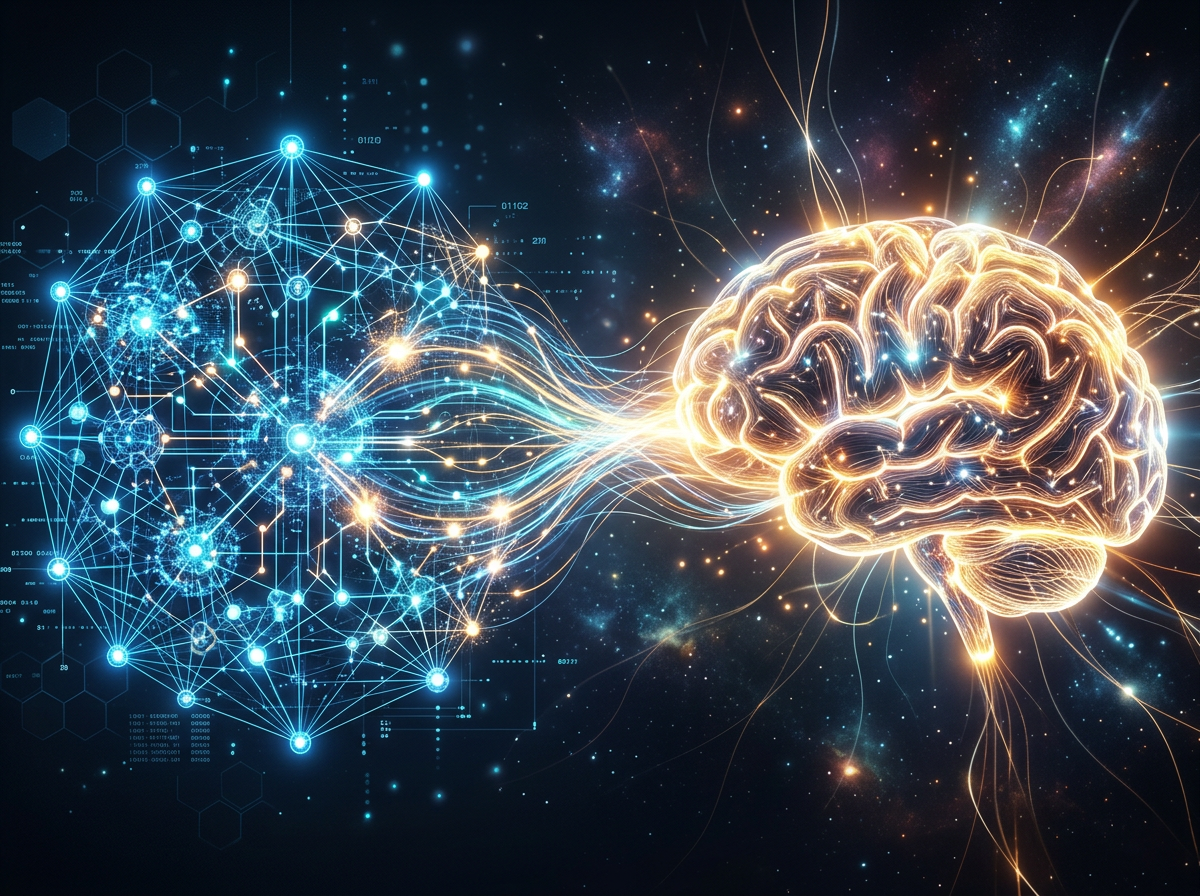
We have all been there: a quick prompt to a chatbot provides a perfect explanation of quantum physics or a complex legal directive in seconds. But as we move through 2026, a new concern is emerging in cafes from Riga to Lisbon. If the machine does all the summarizing, are our brains becoming “soft”? Learning in the age of artificial intelligence requires a shift in strategy where we treat these tools as sparring partners rather than magic oracles.
The Trap of Passive Consumption
The greatest risk of using AI for learning is a phenomenon called Cognitive Offloading. This is a technical term for the habit of using external tools to perform mental tasks, which can lead to us forgetting how to do those tasks ourselves. When an AI provides a perfect summary, our brains often skip the hard work of analysis, which is exactly where true learning happens.
In the European context, this is a major talking point within the Digital Education Action Plan 2021-2027. The EU is pushing for “high-quality, inclusive, and accessible digital education,” but it emphasizes that technology must support, not replace, human cognitive development. To learn effectively, you must move up the ladder of Bloom’s Taxonomy, a framework used by educators to rank learning stages, moving from just “remembering” to “evaluating” and “creating.”
Use AI as a Socratic Sparring Partner
Instead of asking for answers, try the Socratic Method. This is a learning technique where you ask the AI to lead you to an answer through questions rather than giving it to you directly. Tell the AI: “I am trying to understand the EU AI Act. Don’t summarize it. Instead, ask me three difficult questions to test my current knowledge.”
This approach is already being integrated into Baltic EdTech. For example, the Estonian startup 99math and various Latvian digital learning platforms are experimenting with “Guided AI” that prevents students from seeing a final answer until they have demonstrated the steps to get there. This ensures that the user stays in the driver’s seat of their own education.
Transparency and the EU AI Act
In 2026, we are protected by the world’s most comprehensive set of rules: the EU AI Act. This regulation categorizes educational AI as “high risk,” which means tools used in our schools and universities must be transparent and explainable. You have a right to know why an AI gave you a specific explanation and what data it used.
This is a stark contrast to the landscape in the United States, where the “Black Box” model is more common. In the US, private companies often keep their educational algorithms secret, making it harder for students to spot bias. In Europe, thanks to the GDPR (General Data Protection Regulation) and the AI Act, we are encouraged to be “Critical Users.” We are taught to look for the “Halucination” rate, the frequency at which an AI confidently states something that is factually incorrect.
The Baltic Approach: Digital Literacy as a Shield
In countries like Estonia and Finland, digital literacy is taught as a survival skill. It involves Source Verification, which is the process of checking where an AI got its information. Since AI can sometimes “hallucinate” or invent facts, European learners are encouraged to use a “Triangulation” method: ask the AI, check a primary European source like the Euro-Lex database, and then consult a human expert.
Latvian educational initiatives are currently focusing on “Prompt Engineering for Critical Thinking.” The goal isn’t just to get the AI to talk, but to write prompts that force the machine to cite its sources and provide counter arguments. This turns a passive search into a rigorous debate, keeping your analytical muscles flexed and ready.
Conclusion: Reclaiming the Human Edge
As AI tools become more integrated into our professional and personal lives, the most valuable skill won’t be knowing how to use AI, but knowing when to ignore it. By treating these tools as mirrors for our own thoughts rather than substitutes for them, we can harness the power of 2026 technology without losing our uniquely human ability to think for ourselves.
If you had to learn a completely new language today, would you prefer a human teacher who makes mistakes or a “perfect” AI tutor that never gets frustrated?
References and Interesting Sources:
- EU Digital Education Action Plan 2021-2027
- The EU AI Act: High-Risk AI Systems
- Estonian Education and Youth Board: AI in Education Guidelines
#AILearning #CriticalThinking #EUTech #DigitalEducation #BalticInnovation #EUAIAct #SmartLearning #FutureOfWork
Leave a Reply