
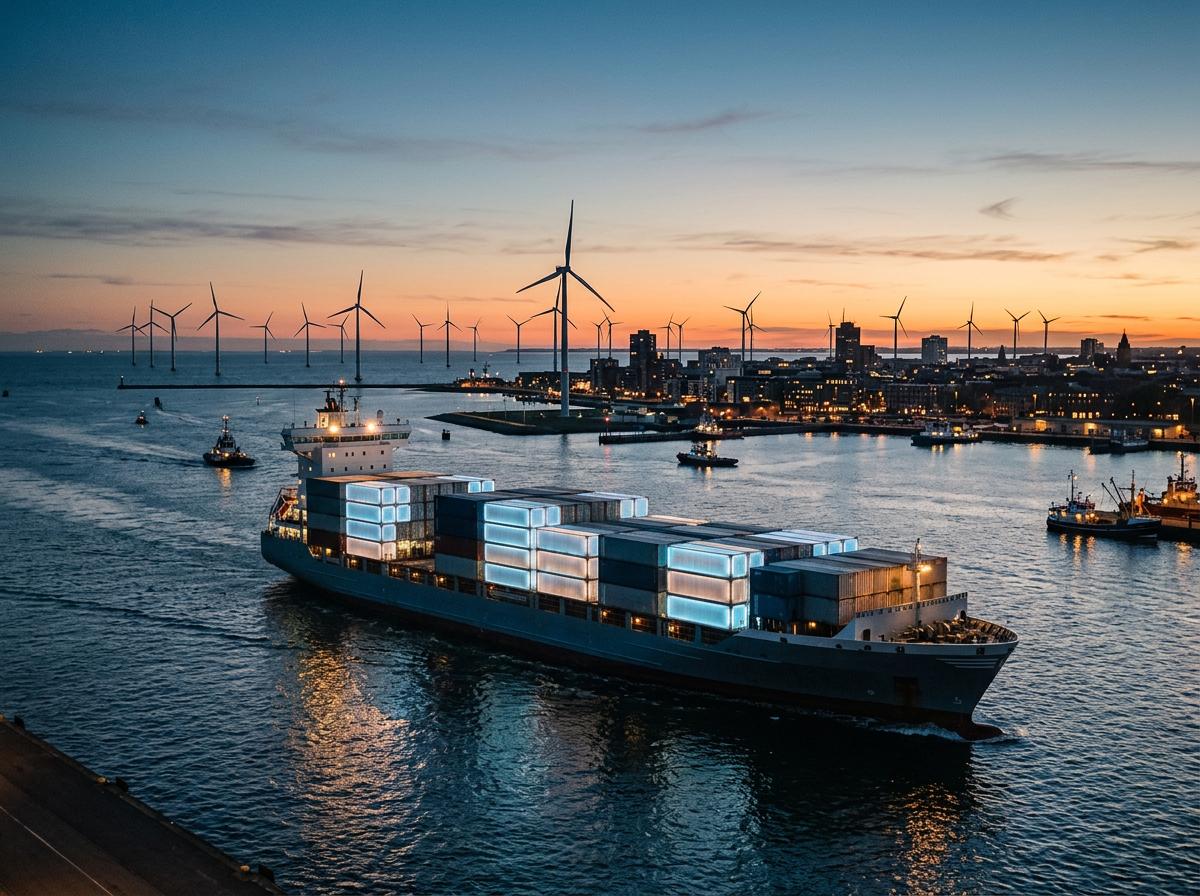
For decades, international trade operated on a simple blueprint: manufacture goods wherever labor and environmental regulations are cheapest, then ship them globally with minimal border friction. But a quiet revolution at the borders of the European Union has just shattered that old playbook. The EU Carbon Border Adjustment Mechanism (CBAM) has officially entered its strict compliance phase, forever changing how goods enter the world’s largest single market.
This groundbreaking mechanism functions as a green tariff on carbon-intensive imports. It is designed to eliminate carbon leakage, which happens when companies move production from regions with strict climate laws to countries where they can pollute for free. By penalizing high-emission products at the border, Brussels is effectively forcing global manufacturers to decarbonize if they want to sell to European buyers.
The Compliance Phase: From Reporting to Paying
The multi-year trial run is officially over. The transitional phase, which allowed foreign manufacturers to simply report their data, concluded at the start of the year. We are now living in the definitive compliance era of the EU Carbon Border Adjustment Mechanism, where accurate data tracking is a financial necessity.
[Transitional Phase: 2023 - 2025] -> Data Collection & Learning (No Fees)[Definitive Phase: Jan 2026] -> Mandatory Authorization & Financial Liability[Financial Execution: Feb 2027] -> Purchasing & Surrendering CBAM CertificatesImporters bringing carbon-intensive materials into the EU must now hold an official Authorized CBAM Declarant status. The financial mechanism works in parallel with the internal EU Emissions Trading System (ETS). Importers must buy digital CBAM certificates, with the pricing directly tied to the weekly auction averages of EU carbon allowances.
The policy targets six core, high-emission industrial sectors:
- Iron and steel
- Aluminium
- Cement
- Fertilizers
- Hydrogen
- Electricity
If an industrial supplier in the United States or Asia cannot prove their manufacturing process is clean, their European importer faces steep certificate fees. This leaves them with a tough choice: invest heavily in clean technology or get priced out of the European market entirely.
The Global Ripple Effect: Forcing the US and Asia to Adapt
The impact of this European climate policy is felt far beyond the borders of the EU. It is triggering structural shifts in manufacturing hubs across the United States and Asia.
In the US, manufacturers have long operated without a national cap-and-trade system or a centralized carbon tax. As a result, American industrial companies exporting heavy machinery, steel, or aluminum components to Europe are facing sudden administrative friction. They are being forced to completely overhaul their factory tracking systems because European buyers now require verified, product-specific emissions data.
+-----------------------------------------------------------+| GLOBAL CLIMATE POLICY APPROACHES |+-----------------------------+-----------------------------+| European Union (CBAM / ETS) | United States (IRA Focused) |+-----------------------------+-----------------------------+| • Regulatory carbon pricing | • Subsidies and tax credits || • Equal border taxation | • No federal carbon penalty || • Mandatory verification | • Fragmented supply data |+-----------------------------+-----------------------------+The contrast with the American approach is stark. While the US relies heavily on subsidies like the Inflation Reduction Act to incentivize clean energy, Europe uses regulatory market access as its primary tool.
Meanwhile, exporters in major Asian manufacturing hubs face an even larger hurdle. Since many of their local power grids rely heavily on coal, their indirect emissions are high. Organizations like International Institute for Sustainable Development (IISD) highlight that upcoming proposals aim to expand this tariff downstream to complex automotive parts and industrial robots. This expansion would create an effective tariff of up to 4.6% on certain foreign supply chains by the next decade, accelerating a global shift toward green industrial practices.
The Baltic and Nordic View: Transforming Regional Supply Chains
For businesses located around the Baltic Sea, this new economic reality is a major competitive advantage rather than a bureaucratic hurdle. Countries like Estonia, Latvia, and Finland have spent years building low-carbon infrastructure, leaving their industrial ecosystems well-prepared for this shift.
Take the manufacturing landscape in Latvia as a prime example. Local companies have access to a domestic electricity grid that already ranks among the greenest in Europe, thanks to a high share of renewable hydropower and biomass. When a Latvian manufacturer sources low-carbon aluminum or steel to produce components for German wind turbines or Scandinavian electric vehicles, their supply chain is highly optimized.
Because regional ecosystems can easily verify low embedded emissions, local Baltic suppliers face minimal border penalties compared to their non-EU competitors. This dynamic is rapidly turning the Baltic region into an attractive hub for clean, high-tech industrial assembly within the single market.
Closing the 80/20 Loopholes: The Rules of Data Verification
To ensure foreign firms do not simply use generic estimates to hide dirty production methods, the European Commission has introduced strict data requirements. Under the latest compliance guidelines, at least 80% of reported embedded emissions must be backed by actual, verified data from production facilities. Only 20% can rely on regional default values.
Furthermore, these official default values are intentionally conservative and penalizing. If an American steel exporter fails to provide a verified data trail from their specific foundry, the EU customs system automatically applies a harsh carbon footprint calculation.
According to regional operational reports from Accountancy Europe, national customs authorities across member states like Germany, France, and Belgium have fully integrated the digital CBAM registry into their entry ports. This enables real-time validation at the border, making it virtually impossible to bypass compliance.
A New Era of Green Protectionism
The successful implementation of this carbon border tariff marks a turning point in global trade. The EU has proven that it can leverage the size of its consumer market to set binding environmental standards far beyond its political borders.
By penalizing high-emission manufacturing, Europe is no longer just regulating its own businesses. It is actively reshaping the industrial strategies of its global trading partners. The ultimate goal is clear: to make sustainable manufacturing the only profitable way to engage in global commerce.
As Europe continues to expand its carbon border tax to downstream products like electronics and vehicles, will other global superpowers be forced to launch their own carbon markets to keep their industries competitive?
References and Further Reading:
- EU Carbon Border Adjustment Mechanism Definitive Regime – European Commission
- CBAM Enters Compliance Phase and Outlines Path Ahead – ICAP
- EU Carbon Border Adjustment Mechanism Is Set to Get Bigger – IISD Explainer
- Operationalizing the Definitive Regime: Factsheet – Accountancy Europe
#CarbonBorderTax #CBAM2026 #ClimateTariffs #EUPolicy #GlobalTrade #GreenDecarbonization #SustainableSupplyChain #EcoInnovation
Leave a Reply