
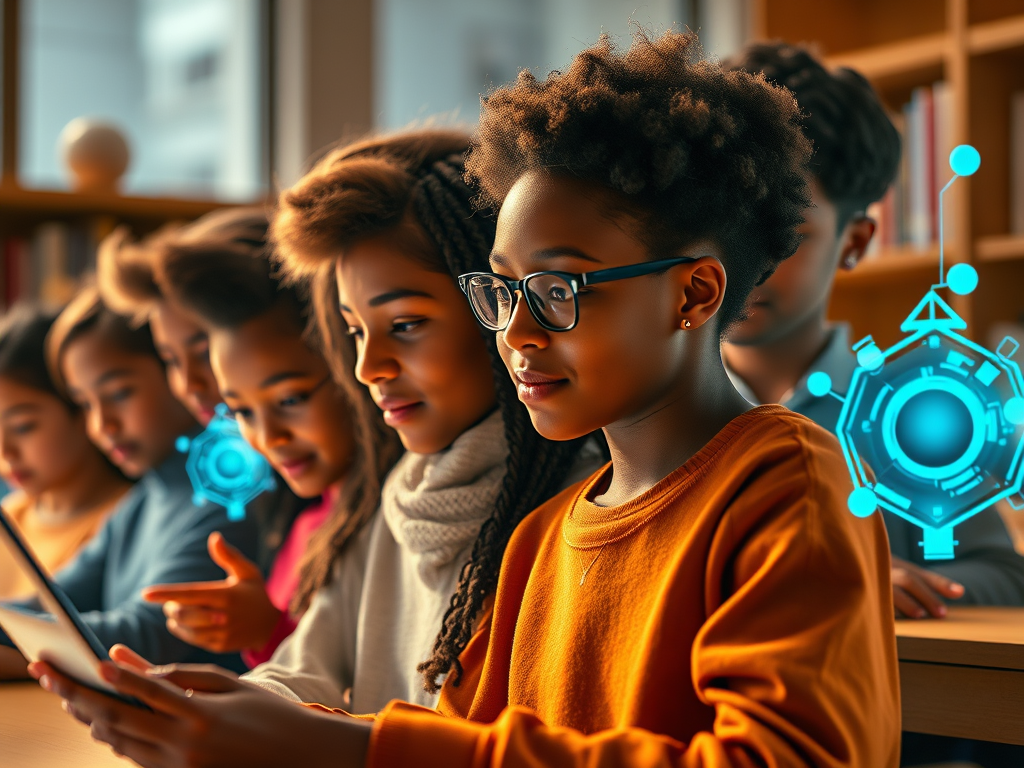
For generations, the classroom has operated on a foundational principle: a single teacher delivering a single lesson to a room full of diverse students. This model has served us well for centuries, but it comes with a fundamental challenge, every student learns differently. Some grasp concepts in minutes, others need more time and repeated practice. Some are visual learners, while others thrive on hands-on experiences. In a one-size-fits-all system, a significant number of students are either left behind or held back.
The search for a solution to this problem has always pointed to the same answer: personalized education. The ideal is a system where every student has a personal tutor, a dedicated guide to help them navigate their unique learning journey. While this has long seemed like an unattainable dream, technology is now turning it into a reality. The combination of artificial intelligence (AI) and adaptive learning is poised to transform the education landscape, offering a level of personalization and support that was once unimaginable.
This post will explore the groundbreaking shift toward a learner-centric model, revealing how AI is becoming the key to unlocking every student’s full potential.
What is Adaptive Learning?
At its core, adaptive learning is an educational method that uses technology to customize the learning experience for each individual student. Instead of a linear, predetermined path, the system dynamically adjusts the content, pace, and difficulty based on the student’s real-time performance and needs.
Imagine a student working on a math problem. If they answer correctly, the system will provide a more challenging question. If they struggle, it will offer a simpler problem, a hint, or even a different type of explanation to help them understand the concept. This isn’t just a basic quiz; it is an intelligent system that models a student’s strengths and weaknesses, filling in knowledge gaps as they appear. The goal is not just to get the right answer, but to ensure the student truly masters the material before moving on.
The Rise of the AI Tutor
Adaptive learning gets its real power from artificial intelligence. An AI tutor is not a simple chatbot; it is a sophisticated program that mimics the role of a human tutor. It can engage in natural language conversations, offer targeted feedback, and provide tailored support.
- Personalized Guidance: An AI tutor can analyze a student’s questions, identify their misconceptions, and guide them toward a solution without simply giving them the answer. It can ask Socratic questions like, “What do you think is the next step?” or “Can you explain your reasoning here?” This approach encourages critical thinking and independent problem-solving.
- A Safe Space to Learn: For many students, the fear of asking a “dumb question” in a classroom setting is a significant barrier to learning. AI tutors offer a safe, judgment-free space where students can ask for clarification as many times as they need. This a-synchronous, on-demand support empowers students to learn at their own pace and build confidence without feeling embarrassed.
- Constant Availability: Unlike a human tutor who is only available at a scheduled time, an AI tutor can be a student’s constant companion, available 24/7. Whether it’s late at night before an exam or early in the morning, students can access support exactly when they need it most.
Examples of these systems are already in use. Platforms like Khan Academy’s Khanmigo are being developed to serve as a guide for students and an assistant for teachers. Language learning apps like Duolingo use adaptive algorithms to tailor lessons to a user’s progress. These platforms demonstrate that personalized education is not a future concept—it is here today.
Unlocking Potential: The Benefits of AI in Education
The integration of AI and adaptive learning offers a cascade of benefits for students, teachers, and the entire educational system.
- For Students: The most significant benefit is the shift from passive learning to active mastery. Students are no longer bystanders in their own education. They are active participants on a journey designed specifically for them. This level of engagement can lead to a deeper understanding of the material, better retention, and a more positive attitude toward learning.
- For Teachers: AI tutors are not a replacement for human teachers; they are a powerful assistant. By automating time-consuming administrative tasks like grading, lesson planning, and tracking individual student progress, AI frees up a teacher’s time. This allows them to focus on the human-centric aspects of education: mentoring, inspiring, and providing the social and emotional support that no algorithm can replicate. A teacher with a clear, real-time view of where each student is struggling can provide targeted, meaningful one-on-one support.
- For the System: The scalability of AI makes high-quality, personalized education more accessible than ever before. It has the potential to level the playing field, providing students in under-resourced schools or remote areas with the same level of support as those in well-funded institutions.
The Human Element: Challenges and Ethical Considerations
Despite the enormous promise, the future of AI in education is not without its challenges. These are not insurmountable hurdles, but they require careful consideration and thoughtful implementation.
- Data Privacy and Security: AI systems rely on collecting vast amounts of data on student performance, behavior, and progress. This raises serious privacy and security concerns. Educational institutions must ensure that this sensitive data is protected from misuse and that there are clear, transparent policies on how it is being collected and used.
- Algorithmic Bias: AI is only as good as the data it is trained on. If a training dataset is biased—for example, it doesn’t represent a wide range of diverse backgrounds or learning styles—the AI system could perpetuate or even amplify existing inequalities. It is crucial to develop and audit these systems with fairness and equity as a top priority.
- The Digital Divide: For AI to truly democratize education, every student needs access to the necessary technology and a reliable internet connection. If access is limited, AI could deepen the gap between students who have these resources and those who do not.
- The irreplaceable role of the teacher: While AI can handle the “what” and the “how” of learning, it cannot replicate the “why.” A human teacher provides the empathy, motivation, and social connection that are essential for a well-rounded education. The ultimate goal is a blended model where AI handles the data-driven personalization, and human teachers provide the inspiration, mentorship, and life skills that only another human can teach.
Conclusion: A New Chapter in Learning
The future of personalized education is no longer a distant ideal; it is taking shape right now. AI tutors and adaptive learning platforms are poised to fundamentally transform how we learn and teach. They promise to move us beyond the limitations of a one-size-fits-all model and toward a system that honors the unique potential of every student.
As we continue to navigate this new frontier, the conversation must be about more than just technology. It must be about how we can leverage these powerful tools to create a more equitable, engaging, and effective educational experience for all. The goal is not just to build smarter systems, but to build a smarter, more capable generation.
We hope this post has given you a glimpse into the exciting future of learning. What are your thoughts on AI tutors? Share your ideas in the comments below! If you found this article insightful, please share it, and for our new viewers, be sure to follow us to stay up to date on our latest content.
#AIinEducation #PersonalizedLearning #EdTech #FutureofEducation #AdaptiveLearning
Leave a Reply