Imagine a global town square where billions of people are shouting at once. Some are selling vintage watches, others are trading shares of massive tech giants, and some are just whispering rumors about the price of wheat. To the untrained ear, it sounds like chaos. But to those who understand the rhythm, this isn’t noise—it’s the most important conversation on the planet.
Markets are often portrayed as cold, mechanical systems of flickering green and red lights on a wall in lower Manhattan. In reality, a market is simply a mirror. it reflects our collective hopes, our deep-seated fears, and our constant need to exchange what we have for what we want. Whether you are buying a loaf of bread or a slice of a company, you are participating in a system that governs the modern world.
In this guide, we will strip away the intimidating jargon to reveal the three simple engines that drive every market. You will learn how prices are actually born, why markets breathe in cycles, and how to stop being a spectator and start being an informed participant. At Feereet, we believe that financial clarity shouldn’t be a privilege of the elite; it should be the foundation of your future.
1. The Pulse: Supply, Demand, and Equilibrium
At its heart, every market transaction is a negotiation. You want to pay as little as possible, and the seller wants to receive as much as possible. The point where you both shake hands is called the Market Price.
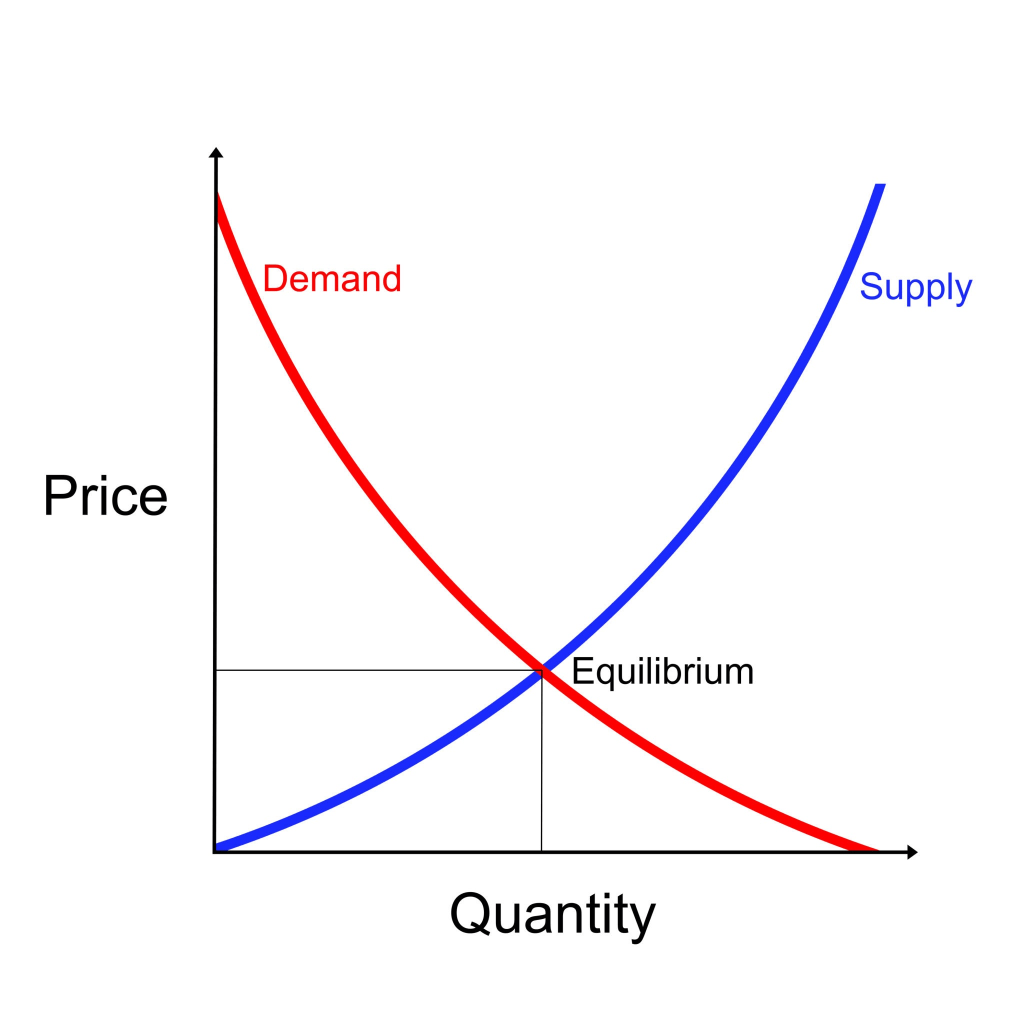
This price is determined by the “Law of Supply and Demand.” Think of it as a balance scale. When more people want something (High Demand) but there isn’t much of it to go around (Low Supply), the price goes up. Conversely, if a warehouse is overflowing with a product that nobody wants, the price tumbles.
In formal economics, we often look for the “Equilibrium Price”—the “sweet spot” where the amount of goods produced perfectly matches the amount consumers want to buy. We can represent this balance as:
Qs=Qd
Where Qs is the Quantity Supplied and Qd is the Quantity Demanded. When these are equal, the market is “cleared,” and the price stabilizes.
2. The Engine: Human Emotion (Fear vs. Greed)
If markets were perfectly logical, prices would only change when a company released a new report or a crop failed. But markets are made of people, and people are famously emotional.
There are two primary forces that move markets in the short term: Greed and Fear.
- Greed (The Bull): When people are optimistic, they buy because they are afraid of missing out on gains. This pushes prices higher than the actual “value” of the item might suggest.
- Fear (The Bear): When bad news hits, people panic and sell everything at once, often pushing prices far lower than they should be.
Understanding that markets are driven by psychology is your “secret weapon.” It allows you to stay calm when everyone else is panicking and to stay cautious when everyone else is celebrating.
3. The Seasons: Understanding Market Cycles
Just like nature, markets move in seasons. No market goes up forever, and no market stays down forever. These are known as Market Cycles.
A typical cycle has four stages:
- Accumulation: The “smart money” starts buying while things are still quiet and cheap.
- Markup: The general public notices and prices start to soar (the “Bull Market”).
- Distribution: Prices peak as the early buyers start selling to the latecomers.
- Markdown: Sentiment turns negative, and prices drop (the “Bear Market”).
Recognizing where we are in a cycle helps you avoid the common trap of buying at the very top and selling at the very bottom.
Navigating the Future with Feereet
The world of finance is changing. With high interest rates and the rapid rise of automation, the “old ways” of looking at markets are being challenged. But the fundamental laws of human behavior and supply remain the same.
At Feereet, our goal is to provide the bridge between complex data and actionable insight. We don’t just want you to watch the markets; we want you to understand the “why” behind every move. By mastering these basics, you gain a sense of purpose and growth that no computer algorithm can replace.
The most successful people aren’t those who predict the future, but those who understand the present better than anyone else.
What is one market myth you used to believe that we just debunked?

Leave a Reply