
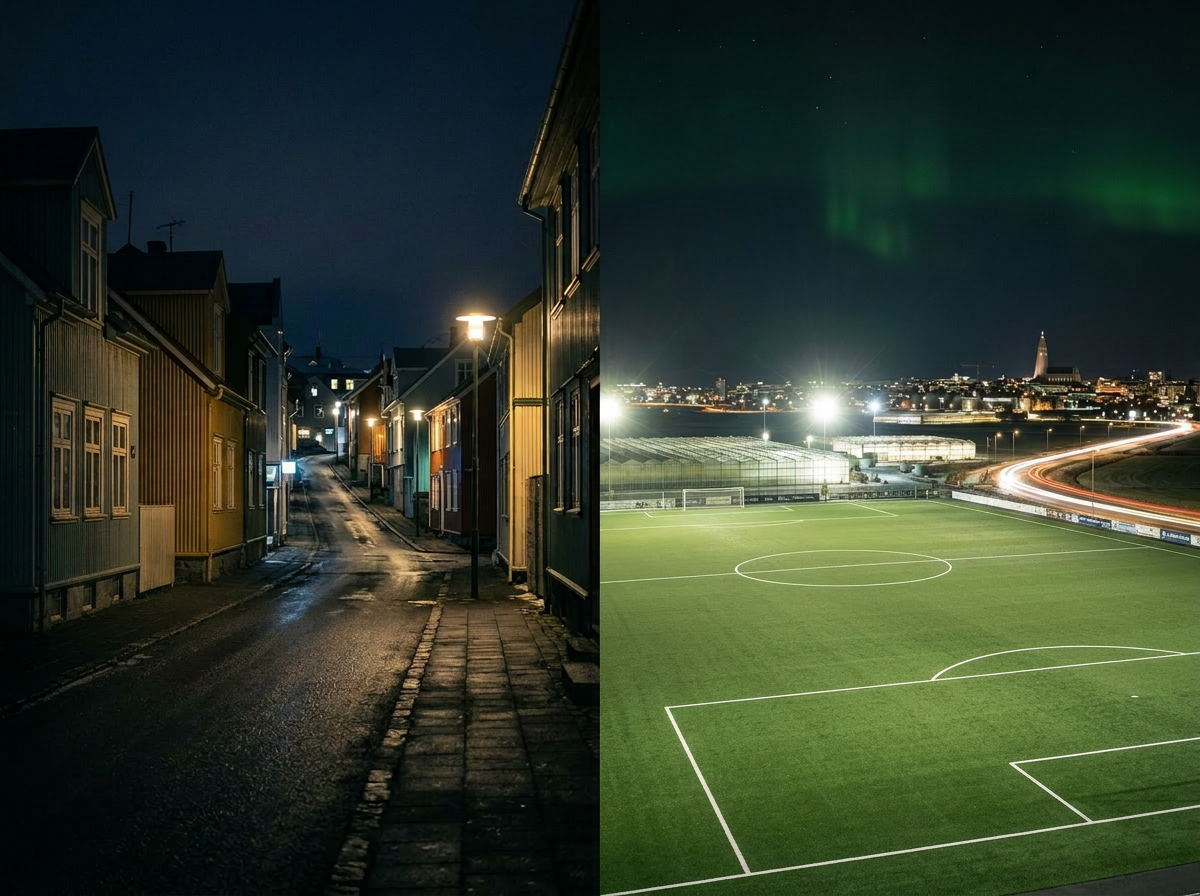
In the late 1990s, the streets of Reykjavik were a source of national anxiety. Walk through the city on a Friday night back then, and you would encounter swarms of teenagers visibly intoxicated, with substance abuse rates among the highest in Europe. Fast forward to 2026, and the transformation is staggering. Iceland’s youth are now officially the “cleanest” in the Western world, with smoking and drinking rates hovering near zero.
This wasn’t achieved through heavy-handed policing or “just say no” scare tactics. Instead, Iceland treated the problem as a design flaw in society. By using data-driven social engineering, they fundamentally changed what it means to be a teenager. Today, we look at the “Icelandic Prevention Model” (IPM) and how its success is now being exported to help cities across the European Union, from the Baltics to the Mediterranean.
The Science of the “Social Vaccine”
The core philosophy of the Icelandic model is simple yet radical: “Society is the Patient.” Instead of trying to change an individual teenager’s behavior through lectures, the model focuses on changing their environment. Researchers identified four main “pillars” of a teen’s life: parents, peers, school, and leisure time.
To monitor these pillars, Iceland introduced an annual, local survey. Every year, students answer questions about their lives. The results are processed within weeks, providing local municipalities with a real-time heat map of risk factors. If a specific neighborhood shows that kids feel lonely or bored, the city doesn’t send in more police, it builds a new sports hall or funds a music program. This data-driven approach is what experts call Primary Prevention, which means stopping the problem before it even begins by strengthening “protective factors” like family bonding and supervised hobbies.
The Curfew and the “Leisure Card”
The most famous, and controversial, part of the Icelandic model involves two specific social interventions. First, a national curfew was established. Children under 12 must be home by 20:00, and those aged 13 to 16 by 22:00. This wasn’t just a law on paper, it was enforced by parent patrols who walked the neighborhoods, not as vigilantes, but as a visible sign of community care.
Second, the government introduced the Leisure Card (Frístundakortið). This is a yearly subsidy provided to every family to pay for organized extracurricular activities like football, dance, or art classes. By making these high-quality, supervised activities effectively free, Iceland ensured that teenagers were too busy and too socially connected to find excitement in substances. This shift moved the “natural high” from chemicals to community achievements.
Europe Adopts the Model: From Tallinn to Tarragona
Iceland’s success hasn’t gone unnoticed by its neighbors. The model has been scaled globally through the Planet Youth initiative, and several European countries are now leading the charge in adapting these methods to their own cultures.
- Estonia: In recent years, Estonia has integrated elements of the model into its national youth strategy. By focusing on data-driven local interventions, Estonia has seen a significant decline in traditional smoking among teens, though they now face new challenges with digital addictions.
- Latvia: Various Latvian municipalities have looked toward the “Nordic Model” to restructure their youth centers. The focus here is on increasing “Intergenerational Closure”, a technical term for ensuring that parents actually know the parents of their children’s friends.
- Spain: The city of Tarragona has been a pioneer in the Mediterranean, using the Planet Youth methodology to reduce alcohol consumption during local festivals by providing alternative, high-energy youth programming.
These examples show that the model is interoperable, meaning it can be plugged into different cultures as long as the local community is willing to look at the data and take responsibility for the environment they provide for their kids.
Comparing the Giants: Europe vs. the United States
The difference between the Icelandic/European approach and the American one is fundamental. In the US, drug prevention has historically been “targeted.” Programs often focus on high-risk individuals or use the “D.A.R.E.” model of teaching kids about the dangers of drugs. However, research has shown that telling a rebellious teen about a dangerous drug can sometimes have the opposite effect, it makes the substance seem exciting.
Europe, led by Iceland, uses a population-wide approach. We don’t wait for a kid to show signs of trouble. Instead, we assume the environment is the risk and fix the environment for everyone. While the US spends billions on “harm reduction” and treatment after addiction has taken hold, European policy, reinforced by the EU Drugs Agency (EUDA), is increasingly shifting funds toward this “social vaccine” of prevention.
The Impact on the Modern EU Citizen
As we move through 2026, the lessons from Iceland are becoming a blueprint for EU social policy. For the average European business or citizen, a “clean” youth generation means a more resilient future workforce and lower healthcare costs. The National Drugs Strategy 2026-2029 being discussed in many member states now includes specific language about “protective factors” and “meaningful connection.”
The Icelandic model reminds us that technology isn’t just about apps and gadgets. The most sophisticated “tech” we have is the data we use to understand human behavior. By applying this data to our social structures, we aren’t just preventing substance abuse, we are building a society where young people feel they belong. In an era of digital isolation and rising mental health concerns, this “human-centric” innovation is more valuable than ever.
Iceland proved that you can change a nation’s destiny in just twenty years. It started with a survey and a football pitch. Where it goes next depends on which European cities are brave enough to follow the data.
Do you think a mandatory curfew for teenagers would be accepted in your city, or is that a step too far for modern European freedom?
#IcelandicModel #PlanetYouth #PreventionScience #EUSpace #YouthHealth #SocialInnovation #BalticTech #FutureSociety
Leave a Reply