
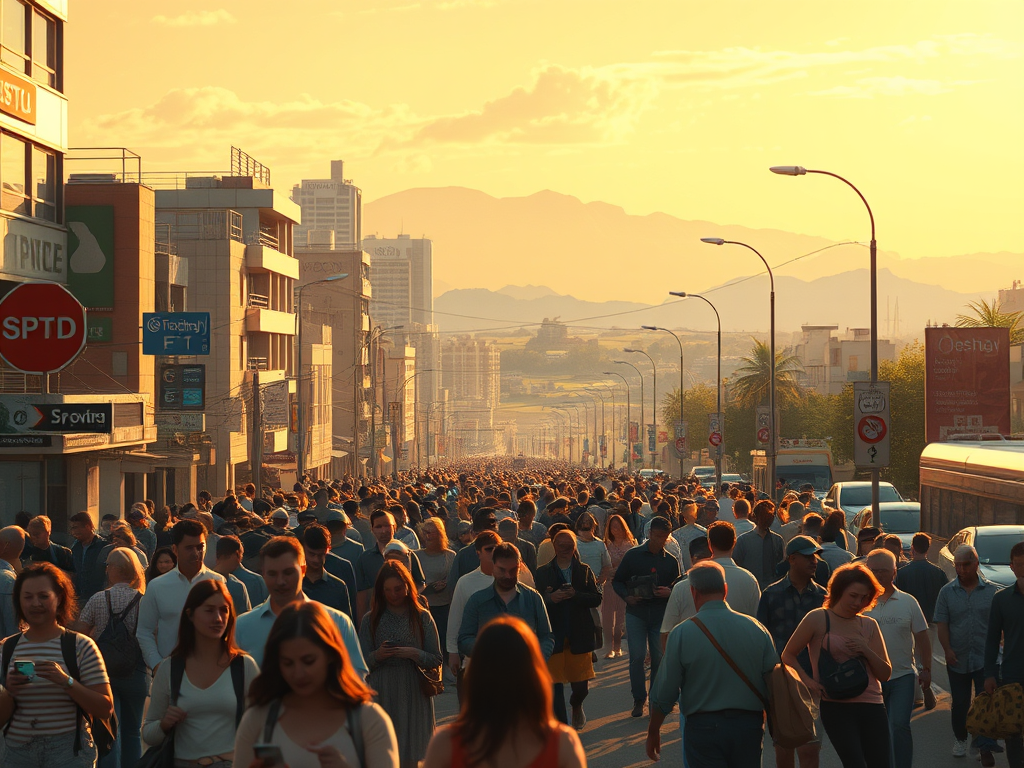
We live in the age of the “calculated move.” Before we visit a new restaurant, we check the star rating. Before we buy a product, we read a dozen reviews. Before we take a career leap, we analyze the market trends. Our lives are increasingly optimized by data, algorithms, and predictive modeling that promise to eliminate risk and maximize efficiency.
But as our digital world gets smaller and more “solved,” we are losing something vital, the art of the unplanned discovery. While data can tell us what has happened and what is likely to happen next, it cannot tell us what could happen if we stepped off the beaten path. In a world governed by numbers, true exploration is becoming the ultimate competitive advantage. Here is why getting lost might be the most productive thing you do this week.
The Efficiency Trap: When Optimization Becomes a Cage
Data is designed to find the “best” path based on historical evidence. If you only eat at restaurants with 4.8 stars, you will likely have a good meal. But you will never experience the thrill of discovering a hidden gem that the algorithms haven’t noticed yet.
In business and life, over-reliance on data leads to The Efficiency Trap. If everyone uses the same data to make decisions, everyone arrives at the same conclusion. You end up in a sea of sameness, where innovation is replaced by incremental tweaks.
- Data minimizes risk.
- Exploration creates opportunity.
True breakthroughs the kind that change industries or personal lives rarely come from following the data. They come from someone asking, “What happens if I try the thing the data says shouldn’t work?”
Serendipity: The Engine of Innovation
In the scientific world, some of our greatest discoveries from penicillin to the microwave were accidents. They were the results of Serendipity, which is the faculty of making fortunate discoveries by accident.
Algorithms are the enemies of serendipity. They are designed to keep you in a “filter bubble,” showing you more of what you already like and agree with. Exploration breaks that bubble. When you explore a new topic, travel to a place without a pre-set itinerary, or talk to someone outside your industry, you are inviting “useful accidents” into your life.
These unplanned intersections are where new ideas are born. You can’t schedule a breakthrough, but you can create the conditions for one by being curious.
Building “Cognitive Map” vs. “GPS Navigation”
Think about how you navigate a city. If you use a GPS, you get from Point A to Point B perfectly. But if the battery dies, you’re lost. You’ve followed instructions, but you haven’t learned the landscape.
When you explore, you build a Cognitive Map. You understand the “why” and “how” of your environment. In a professional context, a person who understands the raw “terrain” of their industry through exploration is much more resilient than someone who only knows how to read a dashboard.
Exploration builds context, and in a world where AI can handle the content, the human who provides the context is the one who remains indispensable.
How to Practice “Micro-Exploration” Every Day
You don’t need to charter a boat to the Antarctic to be an explorer. You can build your “exploration muscle” through small, daily habits:
- The Random Walk: Once a week, take a different route home or walk through a neighborhood you’ve never visited without using a map.
- Interdisciplinary Reading: Read a book or an article about a topic you know absolutely nothing about be it marine biology, ancient architecture, or quantum computing.
- The “Why Not?” Filter: When faced with a low-stakes decision, choose the option that is less “optimal” but more interesting.
The Future Belongs to the Curious
As predictive systems become more powerful, the value of “standard” knowledge will drop toward zero. Anyone can access the data. Anyone can run the analysis.
What the machines cannot do is wonder. They cannot feel the pull of a “hunch” or the excitement of a “what if.” By preserving your sense of exploration, you aren’t just resisting the machines; you are leaning into the very thing that makes you human.
In a world that is being mapped to the millimeter, the most valuable territory left to explore is the space between the data points. Go find it.
Leave a Reply