
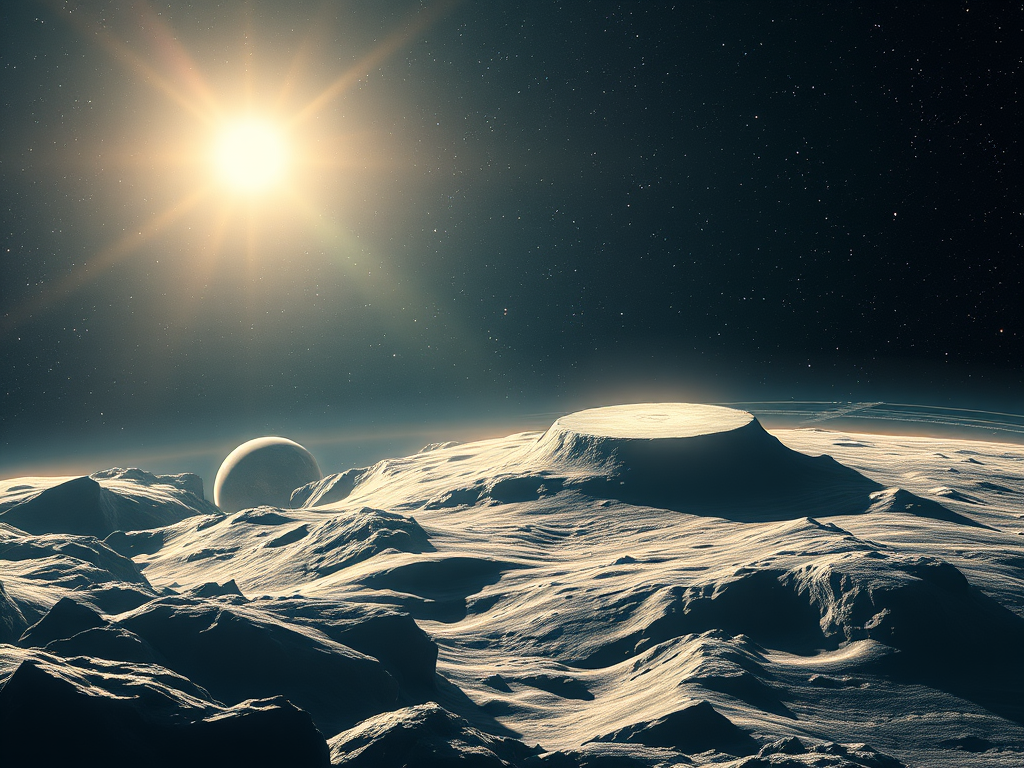
When most people think of space exploration, they picture NASA astronauts or Elon Musk’s rockets landing themselves back on launchpads. But quietly, methodically, and with considerably less drama, Europe has been building one of the most capable and scientifically ambitious space programmes on the planet. And right now, that programme is at the most interesting crossroads in its fifty-year history.
What Is ESA and Who Actually Owns It?
The European Space Agency (ESA) is an intergovernmental organisation founded in 1975, bringing together 22 member states to pool resources, expertise, and ambition for space exploration and research. Its budget for 2024 sits at approximately 10.1 billion euros, its largest ever, following a significant increase agreed by member governments in late 2022.
ESA is not an EU institution, which surprises many people. Countries like Switzerland and the United Kingdom, which is no longer in the EU, are full ESA members. The agency operates more like a scientific cooperative than a government department, with member states contributing budgets proportional to their GDP (Gross Domestic Product, the total value of a country’s economic output) and receiving industrial contracts back in rough proportion to their contributions.
Germany and France are the two largest contributors, between them funding roughly a third of the entire agency budget. France’s involvement is particularly deep through CNES, the French national space agency, which manages the Guiana Space Centre in Kourou, French Guiana, ESA’s primary launch site. Germany’s aerospace industry, centred around companies like Airbus Defence and Space with major facilities in Bremen and Munich, provides a significant portion of ESA’s hardware and engineering capacity.
Smaller member states including the Baltic nations participate at a scale proportional to their economies, but the benefits flow back in genuine ways. Estonian and Latvian technology companies have won ESA contracts in areas including satellite software, Earth observation data processing, and communications technology. For a small nation, a connection to ESA is a connection to one of the most demanding and prestigious technology ecosystems in the world.
What ESA Has Actually Achieved
The agency’s track record is considerably more impressive than its media profile might suggest.
The Rosetta Mission: Landing on a Comet
In November 2014, ESA’s Rosetta mission achieved something no other space agency had ever done. It landed a probe called Philae on the surface of a comet travelling at roughly 135,000 kilometres per hour through deep space. The mission took ten years to reach its destination, required gravitational assists (a technique where a spacecraft uses a planet’s gravity to change speed and direction) from Earth and Mars, and produced scientific data that is still being analysed a decade later.
The Rosetta mission involved contributions from across ESA’s member states, with instruments built in Germany, France, Italy, Finland, and elsewhere. It is the kind of long-horizon, deeply collaborative scientific endeavour that defines what ESA does best, and it remains one of the most technically complex missions in the history of space exploration.
Galileo: Europe’s Answer to GPS
Most people use GPS every day without knowing it is an American military system that the United States government controls and could theoretically restrict. Europe’s answer is Galileo, ESA’s own global satellite navigation system (a network of satellites that allows devices on Earth to determine their precise location), which reached full operational capability in 2016 and now provides positioning services to over three billion devices worldwide.
Galileo is more accurate than the original GPS system for civilian users and was built specifically to ensure that Europe is not dependent on American infrastructure for critical positioning and timing services. This is European strategic autonomy made tangible and orbital. Every time you use navigation in a modern smartphone in Europe, there is a good chance Galileo satellites are involved.
Earth Observation and Climate Science
ESA’s Copernicus programme, run in partnership with the European Commission, operates the world’s most comprehensive Earth observation system. The Sentinel satellites (a family of spacecraft designed specifically to monitor Earth’s surface, atmosphere, and oceans) provide free, open data used by scientists, farmers, urban planners, disaster response teams, and climate researchers across the globe.
When wildfires burn in southern Europe, Copernicus data helps emergency services track the fire front in near real time. When floods hit Central Europe, Sentinel imagery provides damage assessments within hours. When Arctic sea ice retreats further each year, it is partly Copernicus data that documents the change with rigorous precision. This is space technology with direct, practical consequences for European citizens.
ESA vs. NASA and SpaceX: An Honest Comparison
The gap in resources between ESA and its American counterparts is significant and worth being honest about. NASA’s annual budget runs to approximately 25 billion dollars, roughly two and a half times ESA’s total. SpaceX, as a private company, does not publish full financials, but its valuation and launch cadence suggest resources that dwarf most national space agencies.
Speed and flexibility also differ sharply. SpaceX can move from concept to launch in timescales that government agencies, constrained by procurement rules, committee approvals, and multinational consensus-building, simply cannot match. The Falcon 9 rocket’s reusability (the ability to land and reuse rocket boosters rather than discarding them after each flight) has driven launch costs down dramatically, creating competitive pressure that ESA is only beginning to respond to seriously.
Where ESA genuinely competes and in some areas leads is in scientific mission design, international cooperation, and the long-term, non-commercial programmes that private companies have little incentive to pursue. No private company is going to spend a decade flying a probe to a comet. No commercial operator is going to build a free, open, global Earth observation system available to any researcher in the world.
The two models serve different purposes, and Europe has been slow to acknowledge that it needs elements of both. The recent difficulties with the Ariane 6 rocket, which suffered delays that left ESA temporarily without independent heavy launch capability, exposed just how much the agency needs to modernise its approach to commercial spaceflight while preserving what it does uniquely well.
Europe’s New Space Economy and the Baltic Connection
The conversation about European space is changing rapidly. A new generation of European space startups is emerging, many of them working closely with ESA through its Business Incubation Centres (BICs), which operate in 22 locations across member states including in the Baltic region.
Isar Aerospace in Germany, Rocket Factory Augsburg, and PLD Space in Spain are among the European launch vehicle startups building smaller, more flexible rockets designed to compete in the commercial small satellite market. These are not ESA projects but they benefit from ESA expertise, infrastructure, and procurement relationships.
In the Baltic states, the space economy is small but growing with genuine momentum. Estonian company Starship Enterprise (not related to any fictional spacecraft) and other regional firms have built expertise in satellite software and Earth observation data analytics. Latvia’s aerospace sector, though modest in scale, has been developing technical capacity that connects to ESA’s supply chain. For these nations, space is not science fiction. It is an industrial policy opportunity.
Why Europe’s Approach to Space Still Matters
In a world where space is rapidly being colonised by American private capital and Chinese state ambition, ESA represents something genuinely different. It represents the idea that space exploration is a shared human endeavour that should produce open science, global benefits, and knowledge that belongs to everyone rather than to shareholders or national militaries.
That is not a naive position. It is a deliberate values choice, the same kind of choice that produced GDPR and the EU AI Act, applied to the cosmos. And like those regulatory frameworks, it is a choice that shapes what Europe builds, how it builds it, and why the rest of the world sometimes finds European institutions infuriating and admirable in equal measure.
ESA faces real challenges. It needs faster decision-making, stronger commercial partnerships, and a credible independent launch capability. But its scientific record, its collaborative model, and its commitment to open access space data give it a foundation that money alone cannot easily replicate.
💬 Here is the question worth thinking about: Should Europe be trying to out-compete SpaceX and NASA on their own terms, or should ESA double down on the things it does uniquely well and let the private sector handle the commercial race? And does it matter to you, as a European citizen, whether Europe has independent access to space? Tell us in the comments.
Leave a Reply