
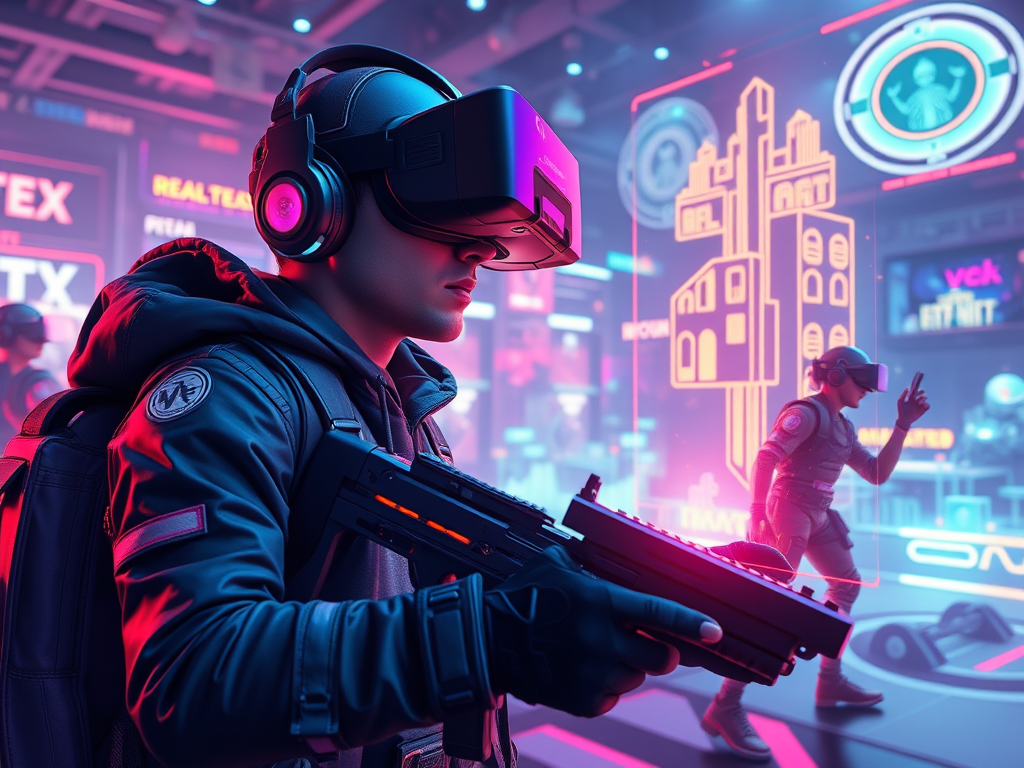
The New Frontier: Why VR and Blockchain are the Perfect Pair
For years, Virtual Reality has promised total immersion, transforming passive players into active participants in digital worlds. Yet, traditional VR gaming, like its console and PC counterparts, often operates on centralized servers. This model means in-game assets, the rare armor, the custom skins, the virtual land, are ultimately controlled by the game’s publisher.
Enter Blockchain. As a decentralized, immutable ledger, it offers something that has been missing from digital gaming: true, verifiable ownership. When you combine the visceral immersion of a VR world with the secure, transparent asset management of a blockchain, you get a powerful, player-centric ecosystem.
This combination creates a new dimension of value. Players don’t just use their digital items; they own them as Non-Fungible Tokens (NFTs). This verifiable ownership is the linchpin that turns a hobby into a potential economy.
True Digital Ownership: The Power of NFTs in a Virtual World
The core mechanism enabling this revolution is the Non-Fungible Token (NFT). In a VR game, an NFT can represent nearly any digital asset:
- Virtual Real Estate: Ownership of a plot of land or a building in a decentralized metaverse like Decentraland or The Sandbox. This land can be developed, monetized, and sold on open marketplaces.
- Unique In-Game Items: A legendary weapon, a custom avatar, or a rare vehicle is minted as an NFT. Because this token lives on the blockchain, no central authority can delete it, revoke it, or duplicate it.
- Digital Identity and Avatars: Your customized avatar can be tokenized, allowing it to act as a consistent, transferable identity across different compatible virtual worlds, carrying its history and value with it.
For the first time, a player’s investment of time and money in a virtual world translates into tangible, real-world value. If a player spends 100 hours earning a unique sword in a traditional game and the game shuts down, the sword vanishes. In a blockchain-integrated VR game, that NFT sword remains in the player’s crypto wallet, ready to be sold, traded, or potentially used in another game that supports the same blockchain standard.
The Rise of Decentralized Gaming Economies
Blockchain introduces economic models that drastically change the relationship between players and developers:
Play-to-Earn (P2E) Mechanics
P2E is the flagship model of the blockchain gaming space. In this model, players are rewarded with cryptocurrency tokens or NFTs for performing in-game activities, such as completing quests, winning battles, or creating content.
In a VR setting, this system is amplified. The depth of interaction in VR makes gameplay more engaging, and the assets earned hold more intrinsic value because they’re part of a highly immersive experience. By engaging with the virtual world, players are not just consuming entertainment; they are generating value that they can liquidate into real-world currency.
Decentralized Autonomous Organizations (DAOs)
A DAO allows a community to collectively govern a project. In VR gaming, this means the players who hold the game’s native tokens can vote on major development decisions, economic policies, or feature roadmaps.
This shift moves power away from a centralized studio and places it into the hands of the community that dedicates its time and resources to the world. Imagine a VR game where the players, not the company, vote on the tax rate for in-game asset sales or the addition of a new map. This level of transparency and player-governance fosters trust and a greater sense of investment in the game’s longevity.
Enhancing Immersive VR Mechanics
The technical properties of blockchain naturally enhance the VR experience:
Transparent Trading and Secure Transactions
Every transaction, the sale of a piece of virtual land, the trade of a rare item, is recorded on the immutable blockchain ledger. This transparency virtually eliminates fraud in asset trading, a common problem in traditional digital marketplaces. Smart contracts automate the exchange, ensuring that a transaction is executed instantly and securely without the need for a third-party intermediary, which means lower fees and faster settlements.
Interoperability Across Virtual Worlds
One of the most exciting long-term prospects is interoperability. Because an NFT is a standard asset on a public blockchain, it is theoretically possible to use an asset from one VR world in another. While still a nascent area, the goal is for your purchased avatar outfit to be worn across multiple compatible games or for your rare resource from one metaverse to be used as a crafting ingredient in another. This creates a cohesive “metaverse” where digital assets are portable, adding immense utility and value to player possessions.
Looking Ahead: Challenges and the Path Forward
While the potential is vast, the VR-Blockchain intersection faces key challenges:
- User Experience: Integrating crypto wallets and managing NFTs can be complex for the average gamer. Simplified user interfaces and seamless onboarding processes are essential for mass adoption.
- Scalability: Current blockchain networks must handle the high volume of transactions, micro-transactions, real-time trades, and in-game actions, required by a massively multiplayer VR environment without prohibitive fees or slow processing times. Layer-2 solutions and specialized gaming blockchains are actively addressing this.
- Content Quality: For these worlds to thrive, they must offer high-quality, genuinely engaging VR content that rivals traditional games. Technology enables the economy, but engaging gameplay drives player retention.
Despite these hurdles, the combined trajectory of VR and blockchain is clear, a future where gamers are not merely consumers but owners, creators, and stakeholders in the digital worlds they inhabit. The days of assets being locked inside walled gardens are numbered. The new era is open, decentralized, and truly immersive.
Disclaimer: The content provided here is for informational purposes only. It is not financial advice. The markets for Virtual Reality, Blockchain, and cryptocurrency are highly volatile and inherently risky. Before making any investment decisions, you should conduct your own research, consult with a qualified financial professional, and be prepared to lose any amount you may invest.
Conclusion
The convergence of Virtual Reality’s immersive power and Blockchain’s economic empowerment is permanently changing the trajectory of the gaming industry. It promises a future where your digital possessions are truly yours, your time spent in a virtual world can be financially rewarding, and the governance of the world is shared by its most dedicated inhabitants.
What do you think? Are you ready to dive into the next level of immersive, player-owned worlds? Share this post with your network, and let us know your thoughts!
New to CRYPYTHONE? Follow us to stay up to date on the latest content and analysis in the crypto and Web3 space!
#VRGaming #BlockchainRevolution #NFTsInGaming #Metaverse #PlayToEarn
Leave a Reply