
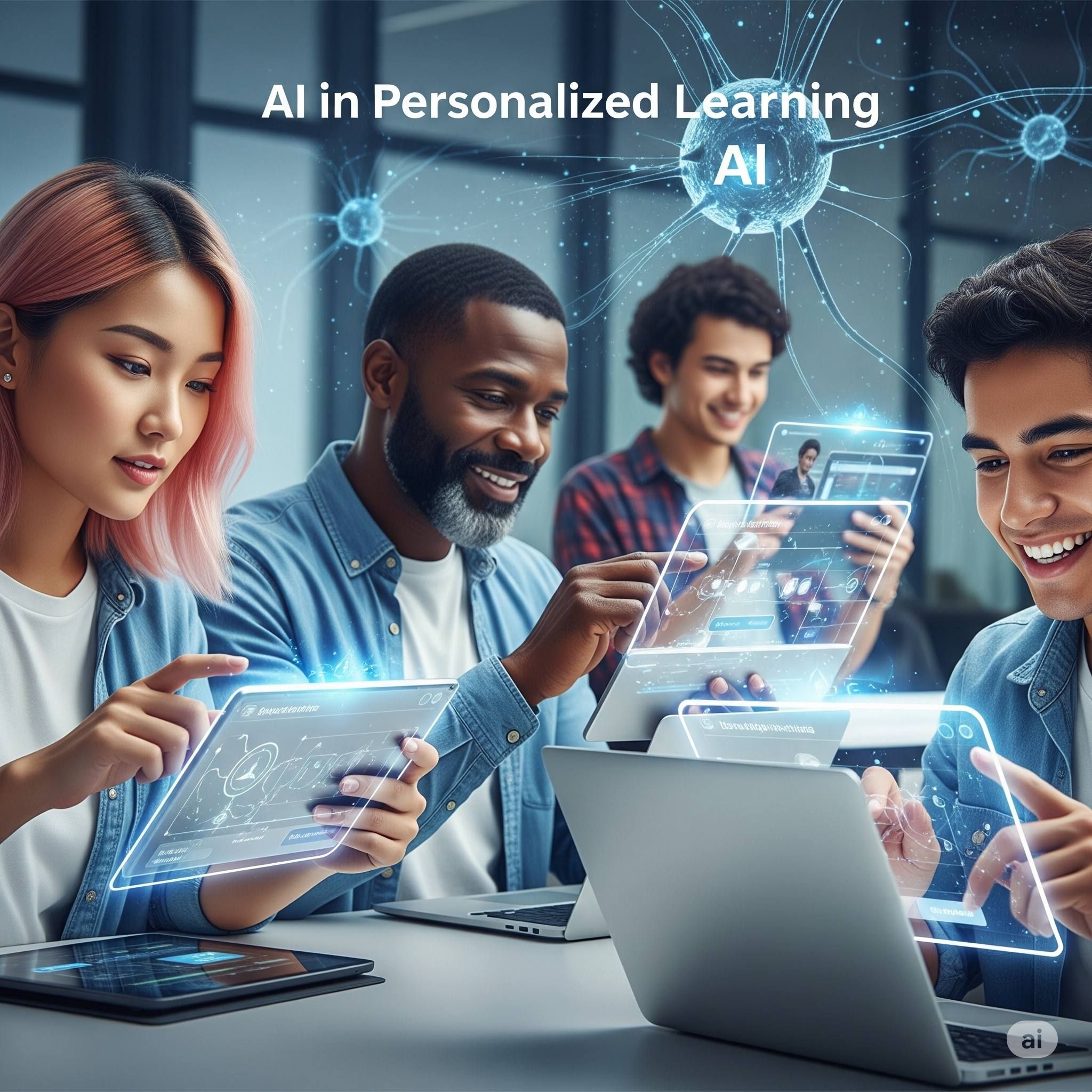
The intersection of cutting-edge technology and established practices often leads to profound transformations. In the realm of education, few developments promise as significant a shift as the integration of Artificial Intelligence (AI) into personalized learning. For centuries, education has largely followed a one-size-fits-all model, where teachers deliver content to a diverse group of students at a standardized pace. While dedicated educators strive to cater to individual needs, the sheer volume of students and the complexities of diverse learning styles make truly personalized instruction a formidable challenge. This is where AI steps in, offering powerful tools to redefine how we learn, making education more efficient, engaging, and tailored to each individual.
At Crypythone.com, while our primary focus often revolves around the digital economy and emerging technologies like blockchain and cryptocurrency, we recognize that the foundational advancements in AI have far-reaching implications across all sectors, including the crucial field of education. Understanding AI’s capabilities in personalized learning not only illuminates its potential to transform human capital but also showcases the pervasive nature of technological innovation that mirrors the disruption seen in finance.
What is Personalized Learning? Unlocking Individual Potential
Before delving into AI’s specific contributions, it’s essential to define personalized learning. It is an educational approach that customizes learning for each student’s strengths, needs, skills, and interests. Instead of a uniform curriculum, personalized learning aims to provide:
- Tailored Content: Learning materials that match a student’s current understanding and preferred learning style.
- Flexible Pacing: Allowing students to progress through material at their own speed, mastering concepts before moving on.
- Individualized Support: Providing targeted assistance and feedback exactly when and where a student needs it.
- Student Agency: Empowering students to take ownership of their learning journey, making choices about what, how, and when they learn.
The benefits of personalized learning are manifold. It fosters deeper engagement, improves knowledge retention, boosts academic performance, and cultivates critical thinking skills. It addresses the inherent diversity in classrooms, recognizing that every student arrives with unique prior knowledge, learning styles (visual, auditory, kinesthetic), interests, and motivations. However, achieving genuine personalization at scale has historically been labor-intensive, requiring immense human resources and data processing capabilities.
The Foundations of AI in Educational Transformation
Artificial Intelligence’s ability to process vast datasets, identify intricate patterns, and make informed decisions forms the bedrock of its transformative potential in education. Key AI capabilities relevant to personalized learning include:
- Machine Learning (ML): Algorithms that learn from data, identifying trends in student performance, predicting areas of difficulty, and adapting content delivery. For instance, an ML model can analyze thousands of student responses to math problems to understand common misconceptions.
- Deep Learning (DL): A subset of ML that uses neural networks to recognize complex patterns, particularly useful for processing unstructured data like student essays, speech, or video interactions to assess comprehension or engagement.
- Natural Language Processing (NLP): Enables AI systems to understand, interpret, and generate human language. This is crucial for intelligent tutoring systems that interact with students through text or voice, providing context-aware feedback and answering questions.
- Computer Vision: Allows AI to “see” and interpret visual information. In an educational context, this could involve analyzing student body language or facial expressions (with ethical considerations) to gauge engagement or frustration, or even assessing handwritten assignments.
- Expert Systems: AI systems designed to emulate the decision-making ability of a human expert. These can be programmed with pedagogical rules and knowledge to guide learning pathways.
By leveraging these capabilities, AI systems can process information about each learner at an unprecedented scale and speed, allowing for dynamic adjustments to the learning experience in real-time.
Key Ways AI Enables Personalized Learning
The integration of AI manifests in several critical applications that bring personalized learning to life:
1. Adaptive Learning Systems: The Dynamic Curriculum
At the forefront of AI’s role in personalized learning are adaptive learning systems. These platforms continuously assess a student’s knowledge, pace, and learning style, then dynamically adjust the curriculum, difficulty level, and type of content presented. If a student masters a concept quickly, the system accelerates their progress. Conversely, if they struggle, it provides additional explanations, remedial exercises, or alternative teaching methods until mastery is achieved.
Imagine a student using an adaptive math platform. If they consistently solve problems related to fractions, the system might introduce decimals earlier than a fixed curriculum would. If they make repeated errors with a specific type of algebraic equation, the system might present extra tutorials, practice problems, or even a different pedagogical approach to explain the concept, ensuring they build a solid foundation. This eliminates the “one-size-fits-all” frustration, where advanced students get bored and struggling students fall behind.
2. Intelligent Tutoring Systems (ITS): AI as a Personal Coach
Intelligent Tutoring Systems are sophisticated AI applications designed to provide one-on-one instruction and feedback, much like a human tutor. Unlike traditional computer-aided instruction that follows a linear path, ITS can:
- Diagnose Knowledge Gaps: Pinpoint specific areas where a student is struggling or has misconceptions.
- Provide Targeted Feedback: Offer immediate, context-specific feedback on assignments, quizzes, or problem-solving attempts.
- Tailor Explanations: Present explanations in different formats (e.g., text, video, interactive simulations) based on the student’s learning preferences.
- Answer Questions: Utilize NLP to understand student queries and provide relevant answers, often in a conversational manner.
These systems can be available 24/7, offering support outside of traditional classroom hours and providing a scalable solution to the long-standing challenge of providing individualized tutoring to every student.
3. Personalized Content Curation and Recommendation
The digital age has brought an explosion of educational content, from online articles and videos to interactive simulations and virtual labs. AI can act as a sophisticated curator, sifting through this vast ocean of resources to recommend materials specifically relevant to a student’s learning goals, interests, and past performance.
For instance, an AI-powered platform might recommend supplementary videos for a visual learner struggling with a particular science concept, or suggest advanced readings for a student showing exceptional aptitude in history. This moves beyond generic search results, providing hyper-relevant content that enhances understanding and engagement.
4. Automated Assessment and Actionable Feedback
Grading assignments and providing constructive feedback is one of the most time-consuming tasks for educators. AI can automate the assessment of various assignment types, from multiple-choice questions to essays and coding exercises. More importantly, AI can go beyond just assigning a grade; it can provide immediate, targeted feedback that helps students understand why they made mistakes and how to improve.
AI can analyze patterns in errors across a class, informing teachers about common areas of difficulty. For students, receiving instant feedback means they can correct misconceptions immediately, reinforcing correct learning patterns rather than waiting days for a teacher to return an assignment. This iterative feedback loop is crucial for effective learning.
5. Predictive Analytics: Identifying and Supporting At-Risk Students
AI’s ability to analyze large datasets of student performance, attendance, engagement, and even behavioral patterns allows for predictive analytics. These systems can identify students who are at risk of falling behind, disengaging, or even dropping out before these issues become critical.
By flagging these students early, educators and support staff can intervene proactively with targeted support, whether it’s additional tutoring, counseling, or simply a check-in. This shifts from a reactive approach to a proactive one, helping to improve student retention and success rates.
6. Administrative Efficiency: Freeing Up Educators
Beyond direct learning applications, AI can automate numerous administrative tasks that consume valuable teacher time. This includes:
- Automated Grading: For certain assignment types.
- Scheduling and Resource Management: Optimizing classroom allocation or scheduling parent-teacher conferences.
- Data Entry and Reporting: Generating reports on student progress or compliance.
- Personalized Communication: Drafting personalized emails to parents or students based on data insights.
By offloading these repetitive tasks, AI empowers educators to dedicate more time to what they do best: teaching, mentoring, and building relationships with students.
Benefits for Students: A Tailored Educational Journey
The impact of AI-powered personalized learning on students is profound, leading to:
- Enhanced Engagement and Motivation: When learning is relevant, challenging but not overwhelming, and aligned with individual interests, students are more likely to be engaged and motivated.
- Deeper Understanding and Mastery: Students can spend more time on difficult concepts and less on already mastered ones, leading to genuine understanding rather than rote memorization.
- Self-Paced Learning: This flexibility caters to varying learning speeds, reducing stress for slower learners and preventing boredom for faster ones.
- Increased Accessibility: AI tools can provide accommodations for students with disabilities (e.g., text-to-speech, real-time captioning, adaptive interfaces) and overcome language barriers through translation.
- Development of Self-Directed Learning Skills: As students navigate personalized pathways, they develop greater autonomy and become more responsible for their own learning.
Benefits for Educators: Empowering the Human Element
AI doesn’t replace educators; it empowers them, transforming their role from content deliverers to facilitators, mentors, and strategists.
- Data-Driven Insights: Teachers gain unprecedented insights into each student’s learning patterns, strengths, and weaknesses, allowing for truly informed instructional decisions.
- Reduced Workload: Automation of administrative and repetitive tasks frees up time for more impactful activities.
- Focus on Higher-Order Tasks: Educators can dedicate more energy to complex problem-solving, fostering creativity, critical thinking, and social-emotional development.
- Professional Development: AI can help identify areas where teachers might benefit from additional training or resources, fostering continuous professional growth.
- Personalized Parent Communication: With AI-generated insights, teachers can provide parents with detailed and personalized updates on their child’s progress.
Challenges and Ethical Considerations: Navigating the New Frontier
While the potential of AI in personalized learning is immense, its implementation is not without challenges and critical ethical considerations:
1. Data Privacy and Security
AI systems in education rely on collecting vast amounts of student data, including academic performance, learning behaviors, and even biometric information. Protecting this sensitive data from breaches and misuse is paramount. Robust encryption, clear data governance policies, and transparent consent mechanisms are essential to build trust.
2. Algorithmic Bias
AI algorithms are only as unbiased as the data they are trained on. If historical educational data reflects existing societal biases (e.g., disparities in access or performance across different demographic groups), AI systems could inadvertently perpetuate or even amplify these biases, leading to unfair or inequitable learning experiences. Continuous auditing and careful design are crucial to ensure fairness.
3. The “Human Touch” vs. Automation
Education is inherently a human endeavor, involving empathy, social interaction, and nuanced understanding that AI currently cannot fully replicate. Over-reliance on AI could diminish the crucial human connection between students and teachers, potentially impacting social-emotional development and the holistic learning experience. Striking the right balance between AI support and human interaction is vital.
4. Cost and Accessibility
Developing and implementing sophisticated AI-powered personalized learning solutions can be expensive. Ensuring equitable access to these technologies for all students, regardless of their socioeconomic background or geographical location, is a significant challenge. Bridging the digital divide and ensuring universal access to necessary hardware and internet connectivity is crucial.
5. Teacher Training and Adoption
For AI in education to succeed, educators need adequate training and support to understand how to effectively integrate these tools into their teaching practices. Resistance to new technology or a lack of understanding can hinder successful adoption. Professional development programs are essential to empower teachers as facilitators of AI-enhanced learning.
The Future of AI-Powered Personalized Learning
The trajectory of AI in personalized learning points towards increasingly sophisticated and seamlessly integrated systems. We can anticipate:
- More Sophisticated AI: Advancements in generative AI could lead to AI systems that can create entirely new, highly personalized learning content on the fly, including interactive simulations and virtual reality experiences.
- Broader Adoption: As AI solutions become more refined, cost-effective, and user-friendly, their adoption will likely expand from early adopters to mainstream educational institutions globally.
- Emphasis on Ethical AI Frameworks: Growing awareness of ethical challenges will drive the development and implementation of robust ethical guidelines and regulatory frameworks for AI in education, prioritizing student well-being and data privacy.
- Hybrid Learning Models: The future will likely see a blend of AI-powered personalized learning with traditional classroom instruction, allowing educators to leverage AI’s strengths while maintaining the invaluable human element of teaching.
- Lifelong Learning: AI could play a significant role in personalized lifelong learning, helping individuals continuously acquire new skills and adapt to evolving job markets.
Conclusion: Reshaping Education for the Individual
The role of Artificial Intelligence in personalized learning is undeniably transformative. By harnessing AI’s capabilities for data analysis, adaptive content delivery, intelligent tutoring, and automated assessment, education can move beyond its traditional confines and truly cater to the unique needs of every student. While challenges related to data privacy, bias, and the human element must be carefully navigated, the promise of more engaging, effective, and accessible learning experiences is too significant to ignore. As AI continues to evolve, it will undoubtedly reshape the educational landscape, empowering both students and educators to unlock their full potential in an increasingly complex world. The future of learning is personal, and AI is its most powerful enabler.
#AIinEducation #PersonalizedLearning #EdTech #FutureofLearning #AdaptiveLearning
Leave a Reply