
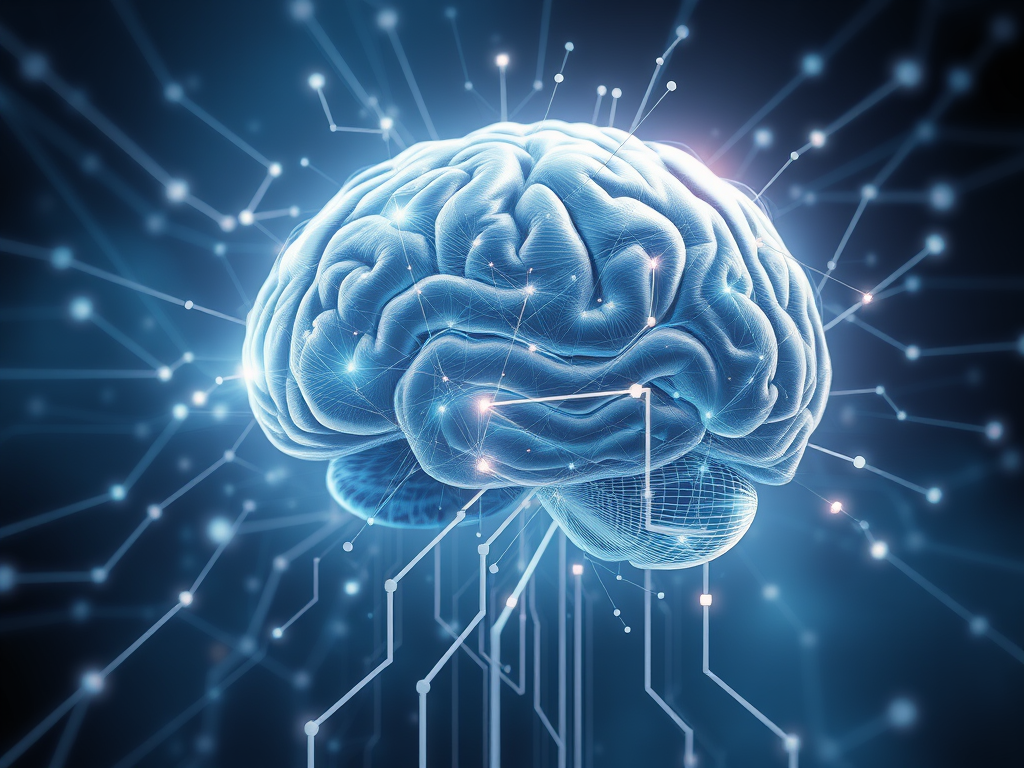
Imagine a world where your intentions transform directly into action, where communication transcends words, and where the limits of the human body no longer define potential. This isn’t science fiction from a bygone era; it’s the thrilling promise of neurotechnology, specifically Brain-Computer Interfaces (BCIs). For centuries, our thoughts have been confined within the skull, expressed only through muscle or voice. But a quiet revolution is underway, bridging the gap between mind and machine, poised to redefine what it means to think, interact, and even exist.
At Crypythone.com, we believe this isn’t just about technological advancement; it’s about unlocking profound new capabilities for humanity. While the idea of linking our brains to computers might seem daunting, the incredible progress in neurotech is overwhelmingly positive, offering unparalleled opportunities to restore lost functions, treat debilitating conditions, and ultimately, augment human experience in ways we are only just beginning to grasp.
Understanding the Brain-Computer Bridge
At its core, a Brain-Computer Interface (BCI) is a system that enables direct communication between a brain and an external device. It bypasses traditional output pathways like peripheral nerves and muscles. The process generally involves:
- Recording Brain Signals: Devices capture the electrical activity generated by neurons in the brain.
- Decoding: Sophisticated algorithms, often powered by artificial intelligence and machine learning, interpret these complex neural patterns.
- Translating: The decoded signals are converted into commands that an external device can understand and execute.
BCIs come in various forms. Invasive BCIs involve surgical implantation of electrodes directly into or onto the brain. These offer high-resolution signals but require surgery. Non-invasive BCIs, such as EEG headsets, are worn externally and are safer but generally capture less precise signals. The beauty of current neurotech lies in the rapid advancements across both fronts, pushing the boundaries of what’s possible.
Why Now? A Convergence of Innovation
The acceleration of BCI development isn’t accidental. It’s the result of several converging technological leaps:
- Deep Neuroscience Insights: Our understanding of how the brain processes information, generates thoughts, and controls actions has vastly improved.
- Miniaturization & Materials Science: Electrodes and implantable components are becoming incredibly small, flexible, and biocompatible, minimizing invasiveness and improving long-term stability.
- AI and Machine Learning: These advanced computational tools are essential. They can sift through immense volumes of noisy brain data, identify subtle patterns, and learn to interpret individual thought intentions with remarkable accuracy.
- Increased Investment: Significant funding from both private ventures and public research initiatives is fueling rapid breakthroughs, transforming lab concepts into real-world applications.
Neurotech’s Unprecedented Promise: Healing and Empowering Lives
The most immediate and profound impact of BCIs is in the medical field, offering hope where little existed before:
- Restoring Movement and Independence: For individuals with paralysis or limb loss, BCIs are revolutionary. Patients are learning to control robotic prosthetic limbs, exoskeletons, or even their own paralyzed muscles with just their thoughts. Recent human trials have demonstrated individuals moving computer cursors, typing, and manipulating virtual objects with thought alone, dramatically enhancing their autonomy.
- Enabling Communication: For those with “locked-in syndrome” or severe neurological conditions like ALS that impair speech, BCIs offer a vital lifeline. Brain activity associated with imagined speech or movement can be translated into text or even synthesized speech, allowing individuals to communicate with their loved ones and the world.
- Treating Neurological Disorders: Neurotech is opening new avenues for managing conditions like Parkinson’s disease, epilepsy, and even severe depression. Deep Brain Stimulation (DBS) controlled by BCIs can modulate neural activity to alleviate symptoms, offering personalized and adaptive therapeutic interventions. Research is also exploring how BCIs can aid in stroke rehabilitation by promoting neuroplasticity and recovery of motor function.
- Sensory Restoration: Beyond motor control, BCIs are being developed to restore sensory perception, potentially offering pathways to restore sight for the blind or hearing for the deaf by directly stimulating neural pathways.
Beyond the Clinic: Expanding Human Potential
While medical applications are paramount, neurotech’s promise extends far beyond:
- Enhanced Human-Computer Interaction: Imagine navigating your computer, smartphone, or smart home environment with just a thought. BCIs could make keyboards, mice, and even touchscreens obsolete for many applications, creating a seamless and intuitive interface with technology.
- Immersive Gaming and VR/AR: For entertainment, BCIs promise unprecedented levels of immersion. Controlling avatars or interacting with virtual worlds using pure thought could unlock gaming experiences previously only dreamt of.
- Augmented Cognition: While still a more speculative frontier, some research explores the potential for BCIs to enhance cognitive functions like memory, focus, or even learning speed. This could involve neurofeedback training to optimize brain states or, in the distant future, direct brain-to-brain communication for a new form of “telepathy.”
- Personalized Wellness: Non-invasive BCIs are already being explored for stress management, meditation, and improving focus through real-time brainwave feedback, bringing neurotech into everyday wellness routines.
Navigating the Journey: Challenges and Responsible Innovation
As with any transformative technology, neurotech presents important challenges. Ethical considerations surrounding the privacy of thought, data security, equitable access, and potential for misuse are actively debated. However, this is seen as an opportunity for thoughtful, proactive policy development. Researchers, ethicists, and policymakers are collaborating to establish guidelines that ensure these powerful tools are developed and deployed responsibly, prioritizing human well-being and autonomy. Technical hurdles like long-term implant stability, signal processing complexity, and battery life are continually being addressed through ongoing, cutting-edge research.
The Future of Human Experience
Neurotechnology is not just a scientific pursuit; it’s a journey into the very essence of human experience. It promises to empower individuals with new capabilities, to alleviate suffering, and to reshape our interaction with the digital world. By opening a direct conduit to the brain, BCIs are fostering a future where intention becomes action with unparalleled fluidity, where connection takes on new dimensions, and where the human mind can truly flourish beyond its current biological constraints. The path ahead is one of immense discovery, guided by a collective commitment to ethical progress and the boundless potential of the human spirit.
#Neurotech #BCI #BrainComputerInterface #FutureOfThought #HumanAugmentation
Leave a Reply