The real estate industry is undergoing a digital revolution, and blockchain technology is at the forefront of this transformation. Tokenizing real estate is emerging as a game-changer, offering new ways to own, trade, and invest in property. In this blog post, we will explore what tokenizing real estate means, its benefits, challenges, and how it is reshaping the future of property ownership.
What Is Tokenizing Real Estate?
Tokenizing real estate involves converting ownership of a property into digital tokens on a blockchain. These tokens represent fractional ownership, allowing investors to buy, sell, or trade their shares in a property as easily as trading stocks or cryptocurrencies.
Key Features:
- Fractional Ownership: Investors can own a portion of a property rather than buying the whole asset.
- Liquidity: Real estate, traditionally an illiquid asset, becomes easier to trade.
- Transparency: Blockchain ensures secure and tamper-proof records of ownership.
How It Works:
- The property is assessed and tokenized.
- Tokens are issued on a blockchain, representing fractional ownership.
- Investors can purchase these tokens on a marketplace.
- Owners earn proportional returns from rental income or property appreciation.
Benefits of Tokenizing Real Estate
1. Increased Accessibility
- Lower Investment Threshold: Tokenization allows individuals to invest in high-value properties with minimal capital.
- Global Reach: Investors from anywhere in the world can participate.
2. Enhanced Liquidity
- Secondary Markets: Tokenized properties can be traded on blockchain-based platforms, providing instant liquidity.
3. Transparency and Security
- Immutable Records: Blockchain ensures that ownership and transaction records are secure and tamper-proof.
- Smart Contracts: Automate rental payments and profit distribution.
Challenges of Tokenizing Real Estate
1. Regulatory Hurdles
- Lack of Standardization: Laws governing tokenized assets vary by jurisdiction.
- Compliance Issues: Navigating securities regulations can be complex.
2. Technology Adoption
- Learning Curve: Traditional investors and developers may find blockchain technology challenging to adopt.
- Scalability: Current blockchain platforms may struggle with high transaction volumes.
3. Market Volatility
- Price Fluctuations: The value of tokens can be influenced by market conditions and speculation.
Use Cases of Tokenized Real Estate
Residential Properties
- Fractional ownership in apartments or homes, enabling small investors to gain exposure to high-value markets.
Commercial Properties
- Tokenization of office spaces or shopping malls for institutional and retail investors.
Crowdfunding Projects
- Developers raising funds for new projects by issuing tokens.
Example: Tokenized Real Estate in Action
Graph: Growth of Tokenized Real Estate Market (2020-2025)
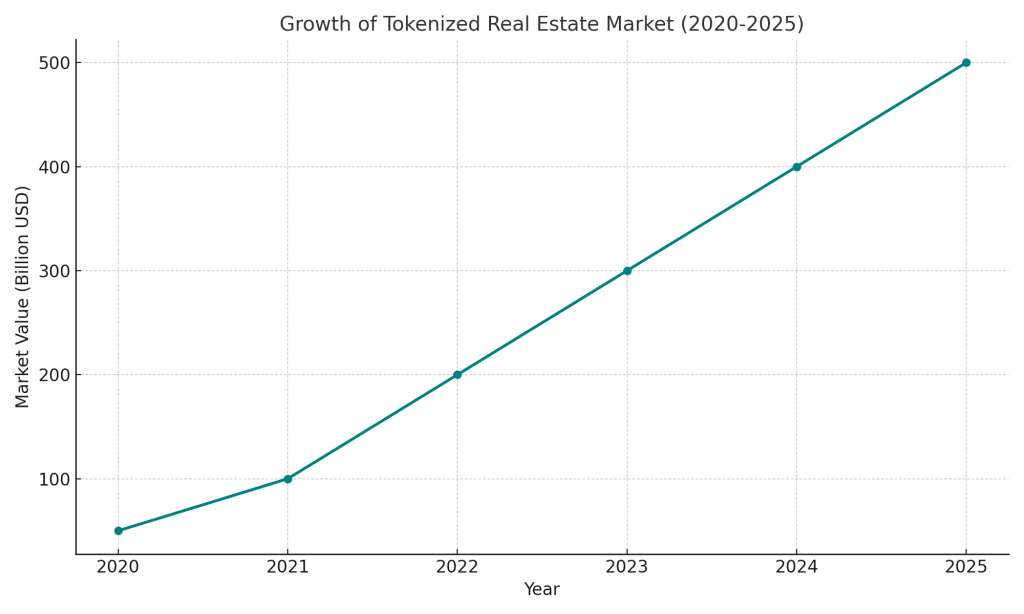

This graph illustrates the rapid growth of the tokenized real estate market, with projections reaching $500 billion by 2025.
Comparison Table: Traditional vs Tokenized Real Estate
| Feature | Traditional Real Estate | Tokenized Real Estate |
|---|---|---|
| Liquidity | Low | High |
| Accessibility | Limited | Global |
| Transaction Speed | Weeks/Months | Minutes |
| Transparency | Moderate | High |
| Investment Size | High | Flexible |
The Future of Real Estate Ownership
Tokenizing real estate is not just a trend; it is redefining how people perceive property ownership. By breaking down barriers to entry, increasing transparency, and enhancing liquidity, blockchain technology is democratizing real estate for a global audience.
Graph: Tokenized Real Estate Adoption by Region (2025)


This graph highlights adoption rates by region, showing rapid uptake in North America, Europe, and Asia.
How to Get Started with Tokenized Real Estate
- Research Platforms: Explore blockchain-based real estate platforms like RealT, Propy, or Harbor.
- Understand Regulations: Familiarize yourself with local laws governing tokenized assets.
- Diversify Investments: Start small and diversify across multiple properties.
Join the Discussion
What are your thoughts on tokenizing real estate? Have you invested in tokenized properties, or are you considering it? Share your experiences and questions in the comments below to join the conversation.
#TokenizedRealEstate #BlockchainTechnology #RealEstateInvestment #FractionalOwnership #CryptoRevolution

Leave a Reply